

Osmotic slurries
Mineral coatings that work by adhering to the substrate, compatible with concrete because they are made of the same material.
Why they are still widely used
They are the only waterproofing family genuinely compatible with a cementitious substrate: same chemical nature, same hygrometric behaviour, adhesion by curing rather than by bonding. They adhere to damp substrates without a primer, which on a basement or a freshly cast structure is the normal condition, not the exception.
They can also be recoated with cementitious adhesives and renders with no intermediate layer, which is why they remain the standard choice under tile.
Rigid or flexible
Rigid single-component slurries are used where the substrate is stable and no movement is expected: pre-sealing against the ground, renovation work, sulphate-bearing substrates.
Flexible two-component slurries, polymer-modified, add the ability to bridge cracks, even at low temperatures. This is what is needed on tanks, containers, swimming pools and anywhere the structure is subject to dimensional movement.
How to read the classifications
EN 14891 qualifies liquid-applied waterproofing products used under tiling, with codes such as CM O1 P where CM indicates the cementitious binder, O1 the crack-bridging capability and P resistance to chlorinated water. EN 1504-2 instead qualifies surface protection systems for concrete. A product declaring both covers installation under tile and structural protection alike.
Products for this system
Selected from the Probar 2026 catalogue for this application.
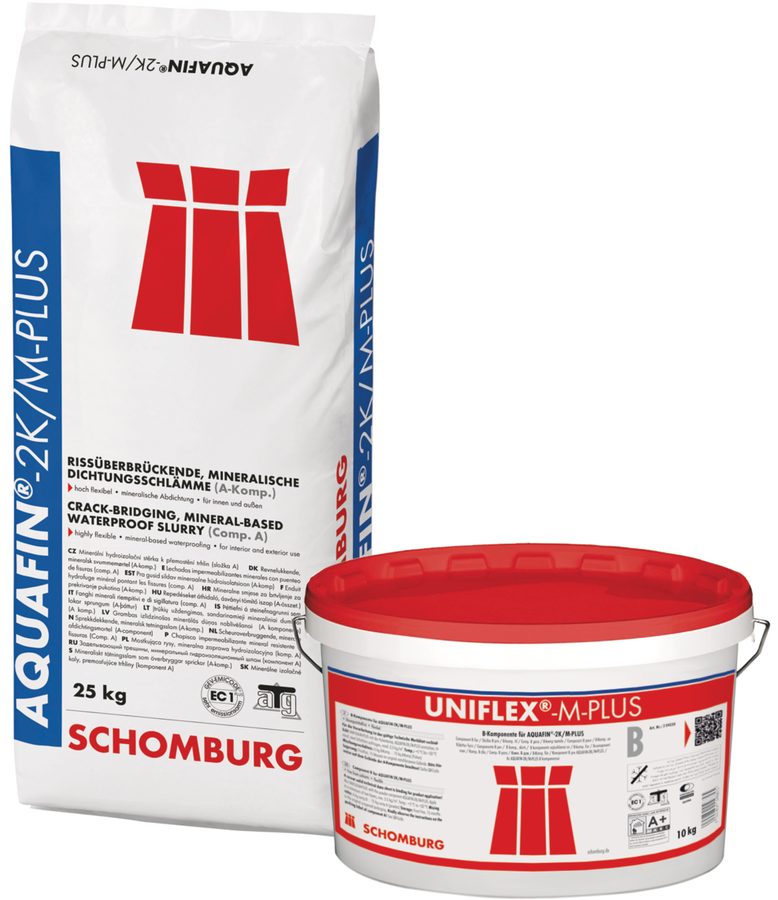 AQUAFIN-2K/M-PLUSFlexible two-component cementitious waterproofing slurryWaterproof slurries and mortarsArt. 204600Schomburg
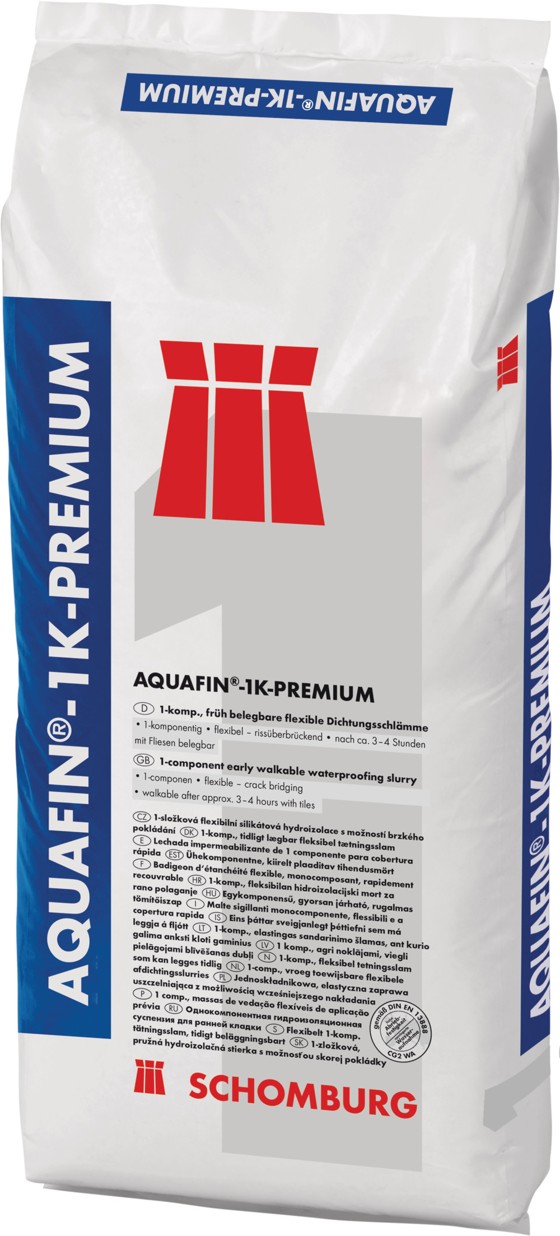 AQUAFIN-1K-PREMIUMSingle-component flexible cementitious waterproofing slurryWaterproof slurries and mortarsArt. 204249Schomburg
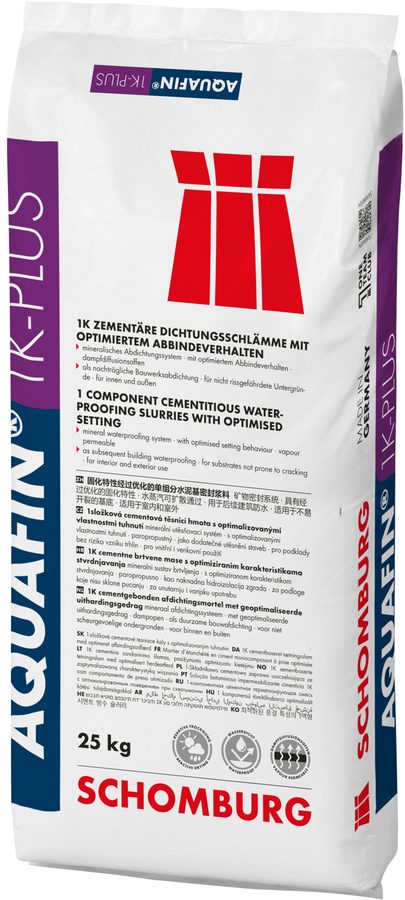 AQUAFIN-1K-PLUSRigid single-component waterproofing slurry with optimised settingWaterproof slurries and mortarsArt. 204609Schomburg
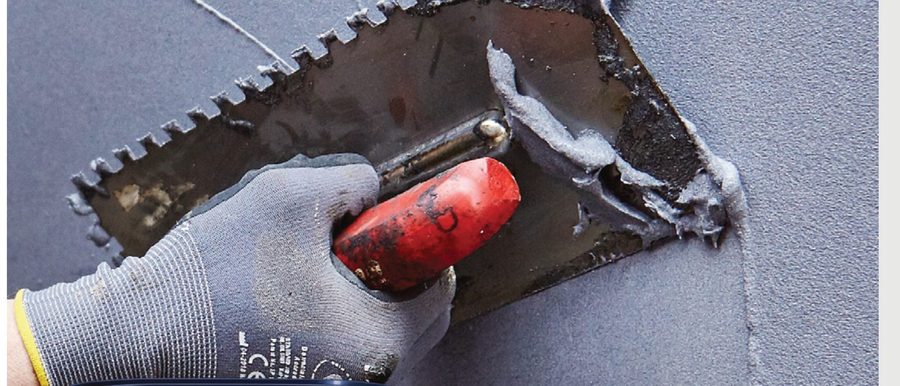 AQUAFIN-RB400Rapid mineral waterproofing for buildings — multi-purpose, bitumen-freeWaterproof slurries and mortarsArt. 204218Schomburg
 AQUAFIN-ICMineral crystalline slurry — permanent structural waterproofingWaterproof slurries and mortars—Schomburg
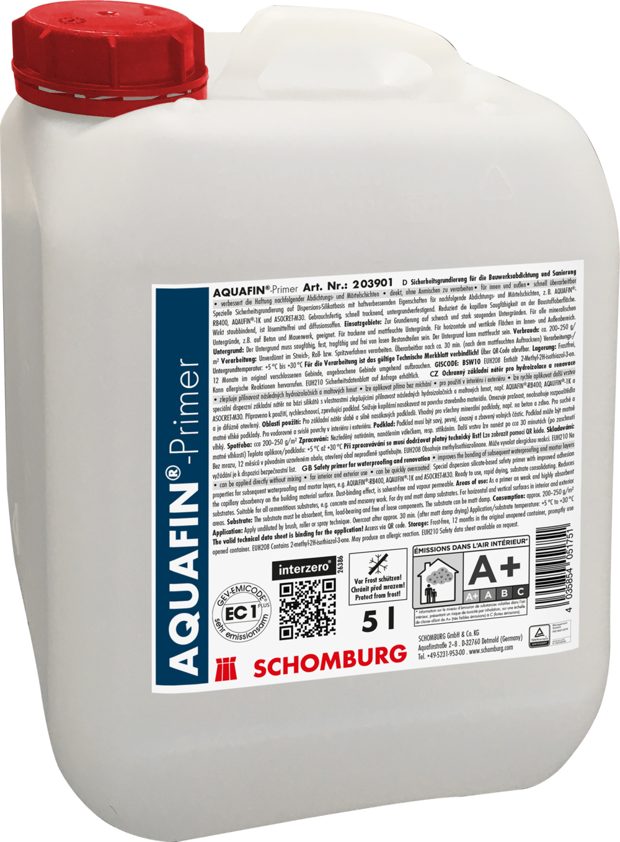 AQUAFIN-PrimerReady-to-use safety primer for preparing cementitious substratesWaterproof slurries and mortarsArt. 203901Schomburg
Frequently asked questions
What is the difference between an osmotic slurry and a crystalline one?
The osmotic slurry forms an adhering coating on the surface; the crystalline product makes active ingredients penetrate the matrix, reacting inside the concrete. Some crystalline slurries do both.
Is a primer needed?
Modern slurries adhere to damp substrates without a primer. A primer remains useful on very absorbent or poorly cohesive substrates, where it consolidates and reduces absorption.
Continue reading
Crystallisation
Concrete becomes waterproof from within: crystals grow in the pores and capillaries, and r…
Injections
A crack conducting water is treated in two stages with two different resins. Confusing the…
Fibres for concrete
They do not replace reinforcement. They control plastic-shrinkage cracking, which is a dif…