

Retaining wall in groundwater
When a below-grade structure sits in groundwater, hydrostatic pressure is permanent and acts on every flaw. The choice changes radically depending on whether the excavation is still open or not.
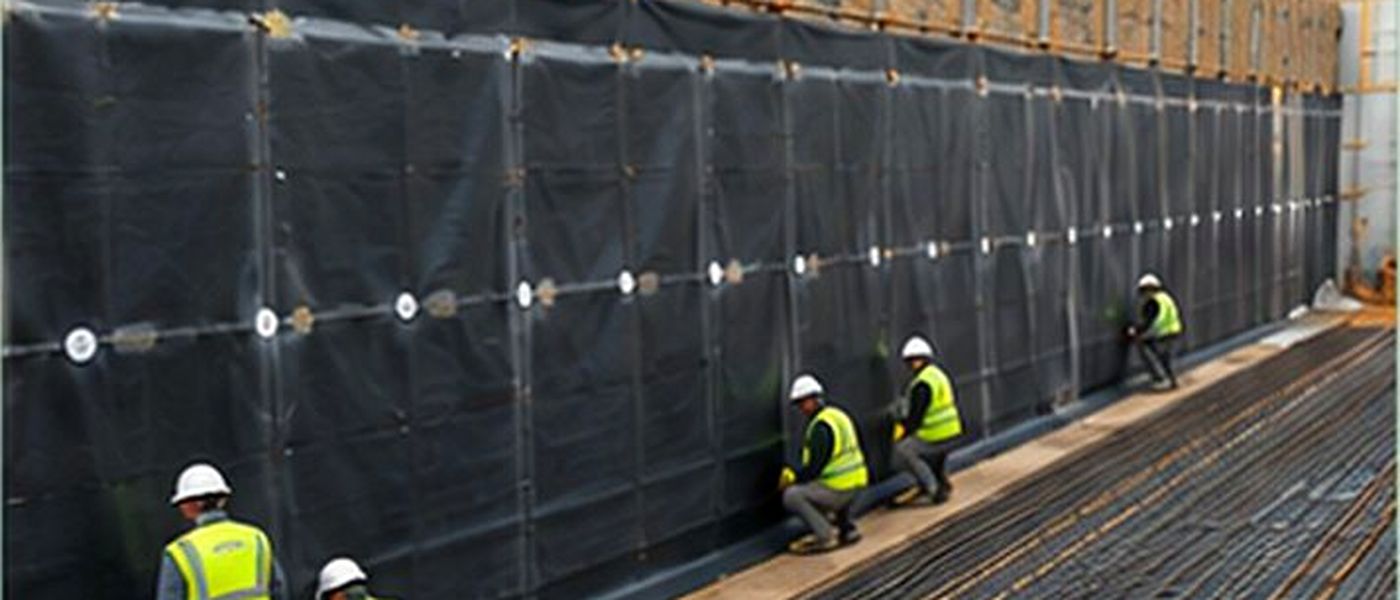
Positive side or negative side
The positive side is the one water pushes towards: the outer face of the wall, in contact with the soil. Waterproofing there is always the technically better choice, because the system works in compression and water never reaches the concrete.
It is only possible, though, while the excavation is open. Once the structure is finished and backfilled, only the negative-side option remains, from the inside: the system works in tension, must have adhesion to the substrate greater than the pressure it is subjected to, and must be chosen with far more care.
The three families on the positive side
Polymer-modified bituminous thick coatings (PMBC) are the classic solution for ordinary water-load classes: ready-to-use single-component, or reactive two-component versions where resistance to pressurised water and radon-tightness are required.
Mineral cementitious slurries, rigid or flexible, work by adhering to the substrate and remain the only family compatible with damp substrates without a primer and with a subsequent cementitious layer applied on top.
Bentonite geocomposites are active sheets: the sodium bentonite enclosed between two geotextiles hydrates on contact with water, swells in a confined way and seals. They are the typical choice for base slabs, diaphragm walls and structures in permanent groundwater, where the mechanical adhesion of the subsequent concrete pour to the geocomposite makes the difference.
The choice starts from the water load
The DIN 18533 standard classifies water loads on below-grade structures, from soil moisture to pressurised water, and each class corresponds to a family of permitted systems. This is the design criterion: first the class is established, then the product is chosen — never the other way round.
Positive side and negative side: where you can waterproof
Products for this system
Selected from the Probar 2026 catalogue for this application.
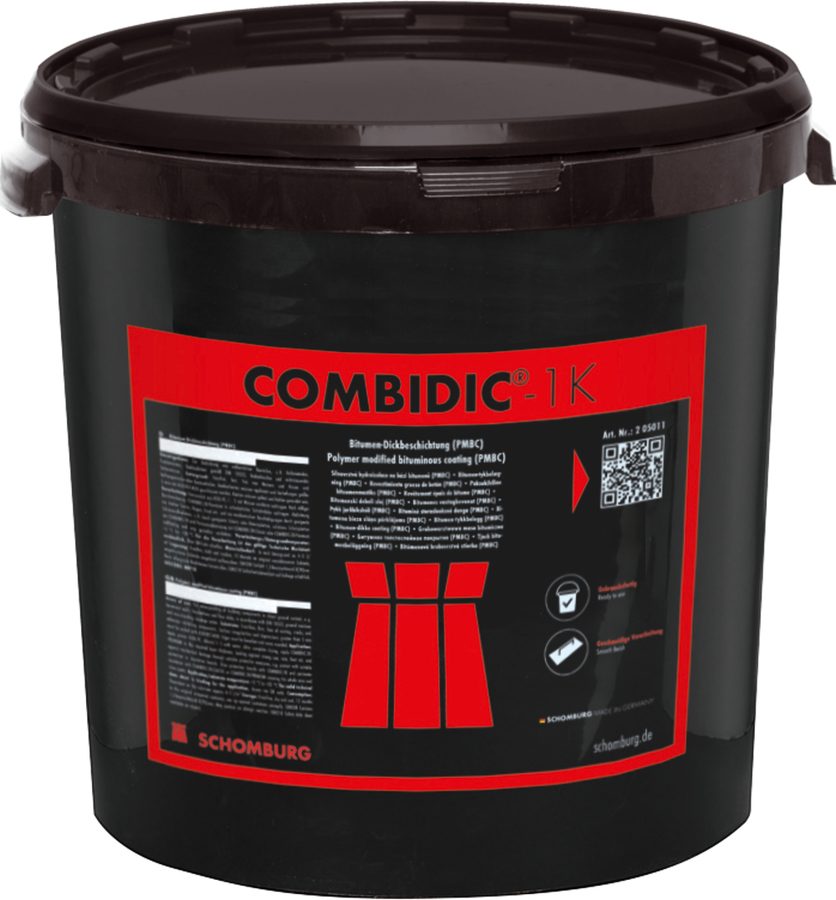 COMBIDIC-2K-PREMIUM2K reactive bituminous coating (PMBC)Fast liquid membranesArt. 204913Schomburg
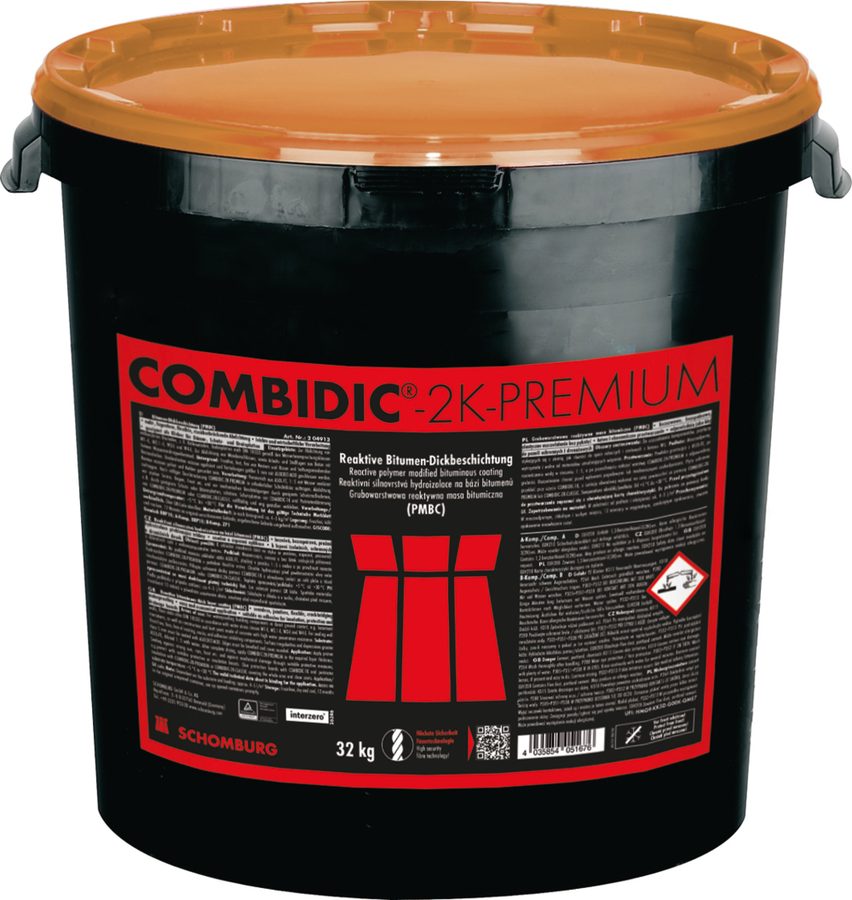 COMBIDIC-1K1K bituminous thick coating (PMBC)Fast liquid membranesArt. 205011Schomburg
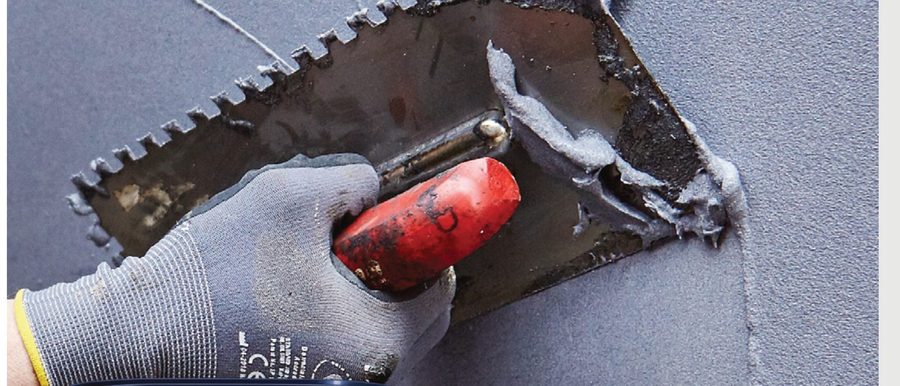 AQUAFIN-RB400Rapid mineral waterproofing for buildings — multi-purpose, bitumen-freeWaterproof slurries and mortarsArt. 204218Schomburg
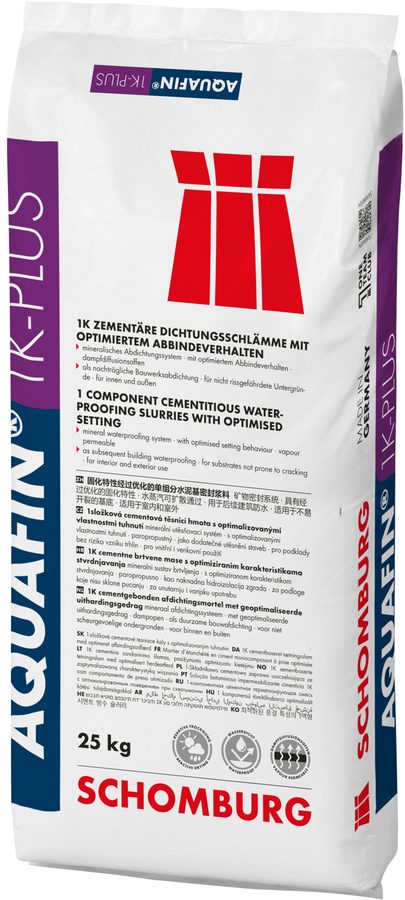 AQUAFIN-1K-PLUSRigid single-component waterproofing slurry with optimised settingWaterproof slurries and mortarsArt. 204609Schomburg
 BGC GRIPSelf-anchoring bentonite geocompositeBentonite membranesBGC GG / BGC GP
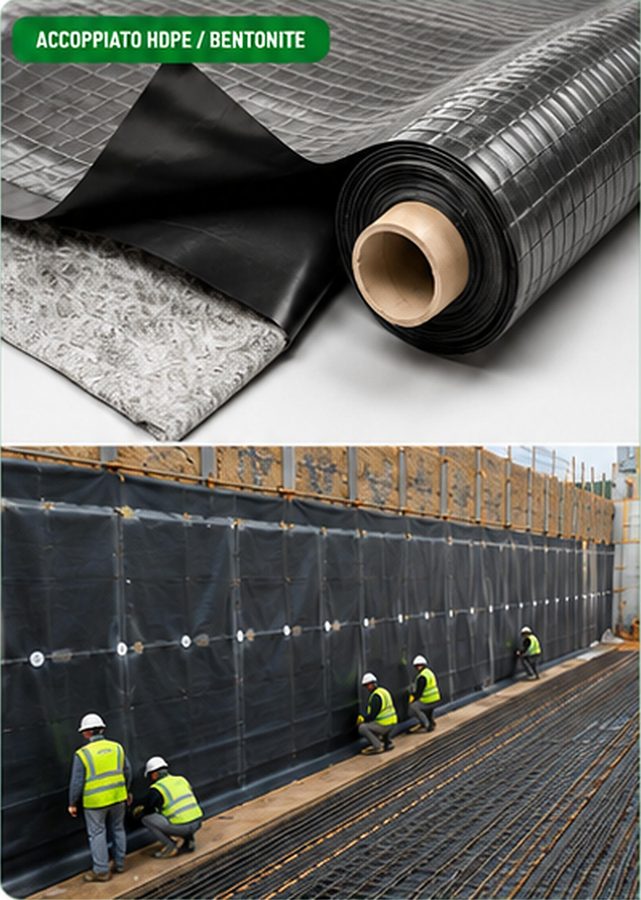 BGC HDPEBentonite geocomposite with HDPE membraneBentonite membranesBGC HDPE GG / GP
Frequently asked questions
Can a below-grade wall be waterproofed only from the inside?
Yes, with systems designed for negative-side pressure, but on two conditions: the substrate must be sound and prepared, and active water ingress must be stopped first. It is a renovation intervention, not the equivalent of waterproofing carried out during construction.
What is the difference between a bituminous sheet and a bentonite membrane?
The sheet is a passive, continuous barrier that must be protected during backfilling. The bentonite membrane is an active system: it seals by hydrating, tolerates small perforations and bonds mechanically to the subsequent pour.
Continue reading
White tank
The concrete structure is itself the waterproofing. No membrane to lay, no sheet to protec…
Leaking basement
The room is built, the backfill is done, and water gets in. The work is carried out from t…
Reinforced concrete repair
Spalling cover concrete is not a cosmetic issue: it is the visible symptom of a process ea…
Rising damp in masonry
Water rises from the ground through the capillaries of the masonry and stops where it evap…