

Leaking basement
The room is built, the backfill is done, and water gets in. The work is carried out from the inside, in three stages that must be followed in order.
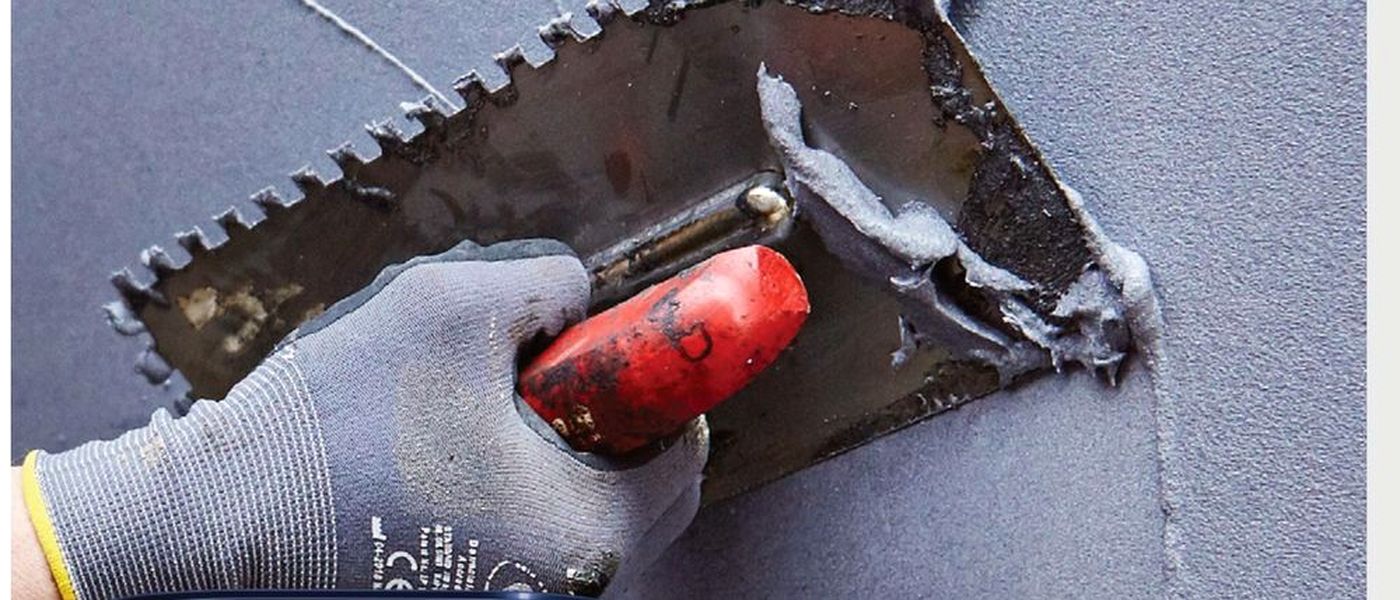
First, find out where it comes from
Leaks in a basement have three different origins and three different treatments: a through-crack conducting water, an unsealed construction joint, or diffuse absorption through a porous surface.
They can be told apart by the pattern of dampness: point-like and concentrated in the first case, linear along a fairly constant level in the second, extensive and uniform in the third. Getting the diagnosis wrong means applying the right product at the wrong spot.
Stage one: stop the moving water
No coating adheres to a substrate with water running across it. Active leaks are plugged with fast-setting expanding cementitious mortars, which cure within seconds and even under water, or with single-component polyurethane resins injected into the crack, which on contact with water develop an expanding foam up to forty times their volume.
Stage two: seal permanently
Polyurethane foam is a plug, not a permanent seal: it stops the water but lacks lasting elasticity. Once the crack is dry, a second injection follows with a low-viscosity two-component resin, which penetrates deep and cures soft-elastic, bonding to the crack walls.
Stage three: waterproof the surface
The repaired substrate is then coated with a penetrating crystalline slurry or a two-component osmotic slurry, both capable of working against negative pressure. The wall-to-floor junction is finished with a fillet in multi-purpose mortar: it is the point where most badly executed repairs leak again.
The three stages, in the order they must be carried out
Products for this system
Selected from the Probar 2026 catalogue for this application.
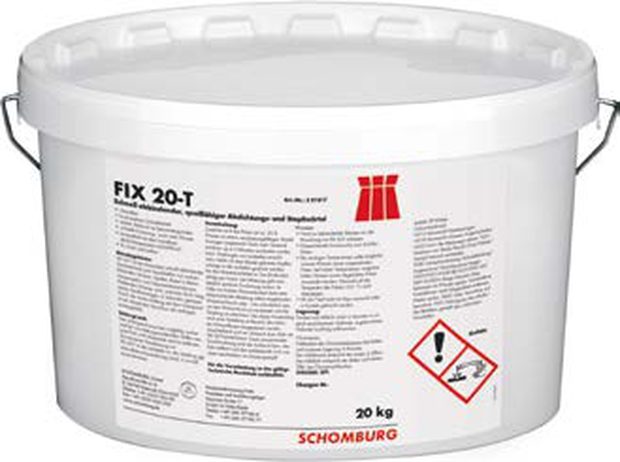 FIX-20-TFast-setting expanding plugging mortar for the immediate stop of active leaksWaterproof slurries and mortarsSistema BETOCRETE-C · TamponamentoSchomburg
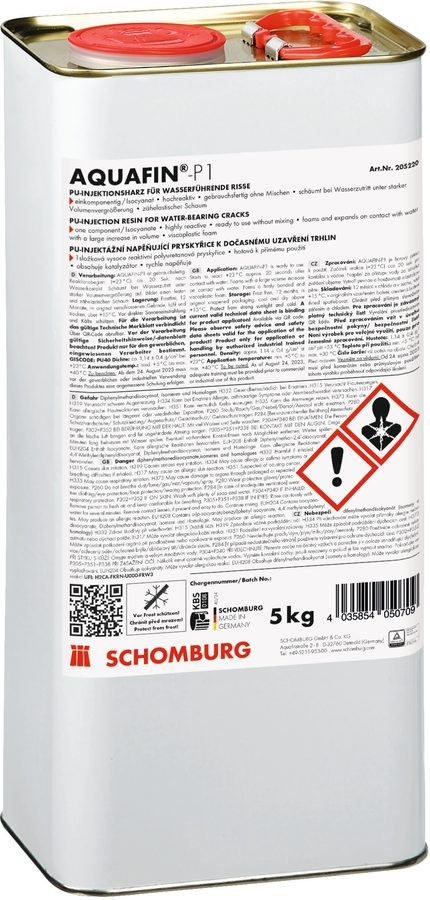 AQUAFIN-P1Expanding polyurethane injection resin — temporary sealingInjection resinsArt. 205220Schomburg
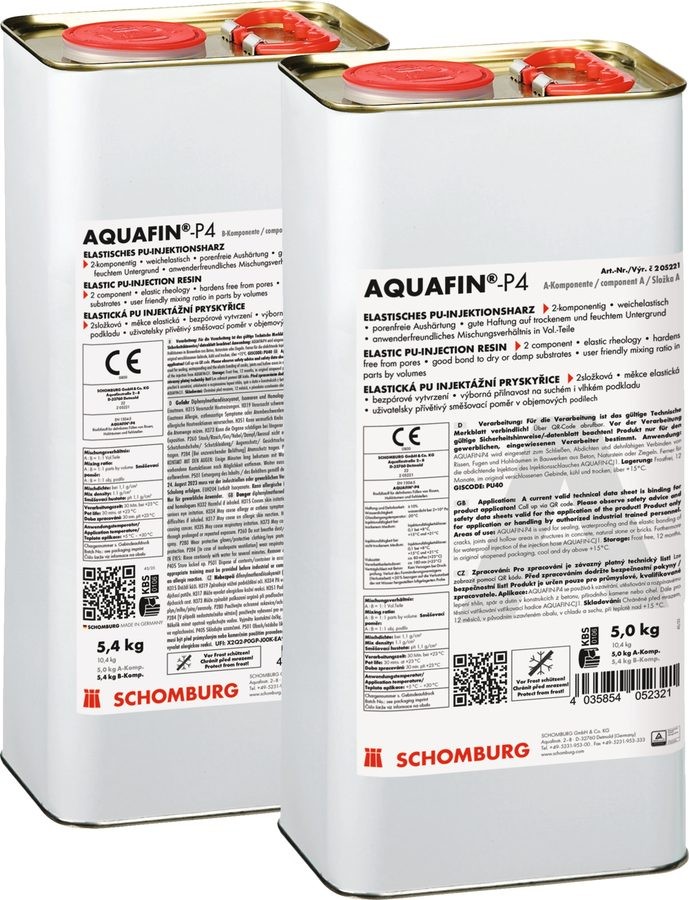 AQUAFIN-P42K polyurethane injection resin — permanent elastic sealingInjection resinsArt. 205221Schomburg
 AQUAFIN-ICMineral crystalline slurry — permanent structural waterproofingWaterproof slurries and mortars—Schomburg
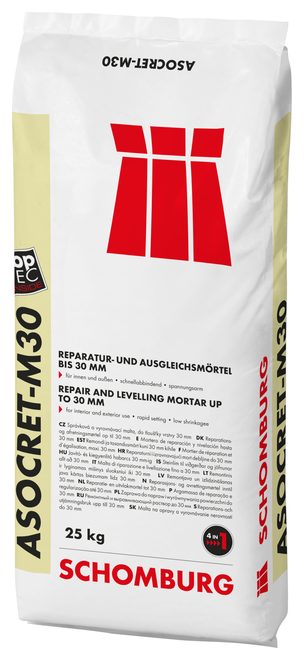 ASOCRET-M30Waterproof multi-purpose mortar up to 30 mm — 4 in 1Concrete repairArt. 205539Schomburg
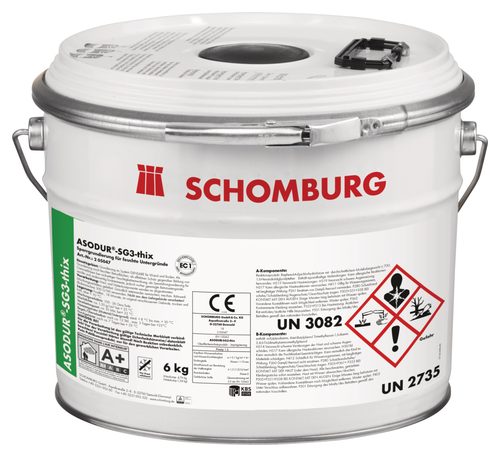 ASODUR-SG3-THIXThixotropic epoxy barrier primer for damp substratesConcrete repairArt. 205047Schomburg
Frequently asked questions
Can it be solved without excavating from the outside?
In most cases yes, with negative-side systems. Excavation remains necessary when the concrete is too degraded to guarantee adhesion, or when the water pressure exceeds what the internal system can withstand.
How long does a repair like this last?
If the three stages are respected and the materials are compatible with each other, it is a permanent solution. Failures almost always come from applying the coating before stopping the active leaks.
Continue reading
White tank
The concrete structure is itself the waterproofing. No membrane to lay, no sheet to protec…
Retaining wall in groundwater
When a below-grade structure sits in groundwater, hydrostatic pressure is permanent and ac…
Reinforced concrete repair
Spalling cover concrete is not a cosmetic issue: it is the visible symptom of a process ea…
Rising damp in masonry
Water rises from the ground through the capillaries of the masonry and stops where it evap…