

Injections
A crack conducting water is treated in two stages with two different resins. Confusing them is the mistake that brings the leak back.
First stage: stop the water
The highly reactive single-component polyurethane resin cures on contact with moisture, developing a tough foam that can reach up to forty times its initial volume. The reaction starts within roughly twenty seconds. It serves to stop active water ingress, not to seal permanently: the foam has good immediate holding power but not the lasting elasticity a crack that keeps moving requires.
Second stage: seal
Once the water is stopped, a second injection follows on the crack with a low-viscosity two-component resin, in a 1:1 ratio. Low viscosity lets it penetrate deep even into fine cracks, and soft-elastic curing lets it follow subsequent movement without detaching. It adheres to both dry and damp substrates.
The injection technique
Injection is carried out through packers inserted into inclined holes that intercept the crack at mid-thickness, placed alternately on the two sides. Work proceeds from the bottom up, one packer at a time, until the product is seen coming out of the next one.
In masonry, where the purpose is a barrier against rising damp rather than sealing a crack, dedicated packers with a ball non-return valve are used, injecting gel or liquid silane at low pressure.
Products for this system
Selected from the Probar 2026 catalogue for this application.
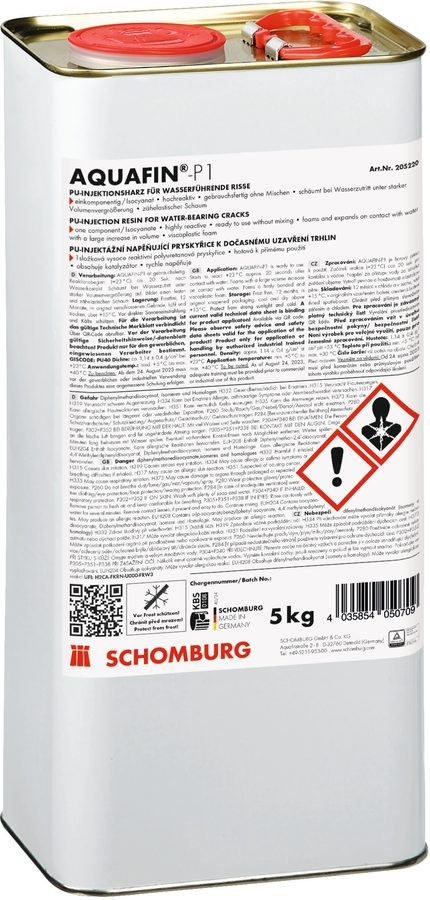 AQUAFIN-P1Expanding polyurethane injection resin — temporary sealingInjection resinsArt. 205220Schomburg
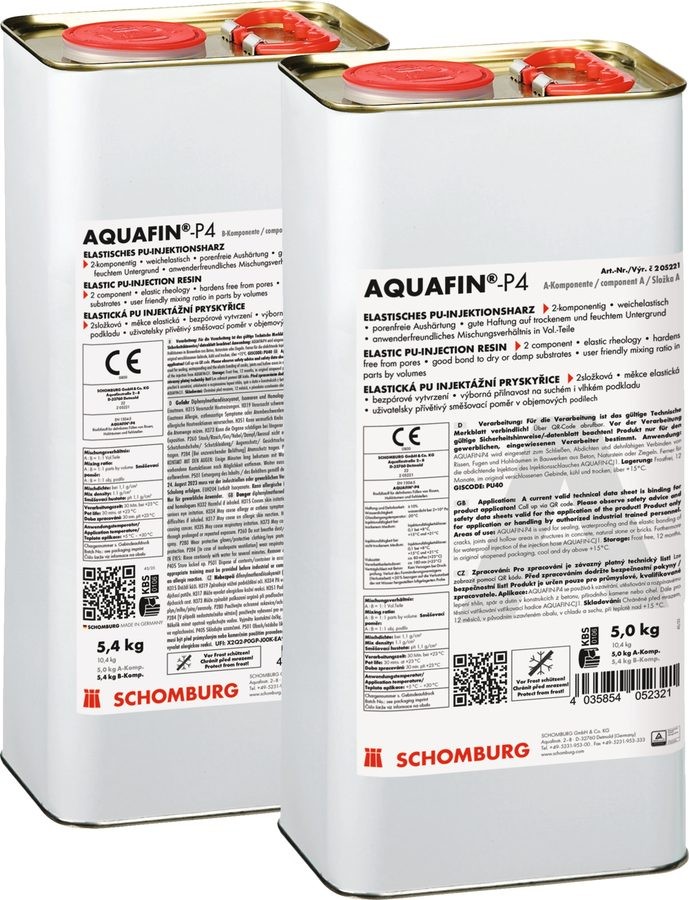 AQUAFIN-P42K polyurethane injection resin — permanent elastic sealingInjection resinsArt. 205221Schomburg
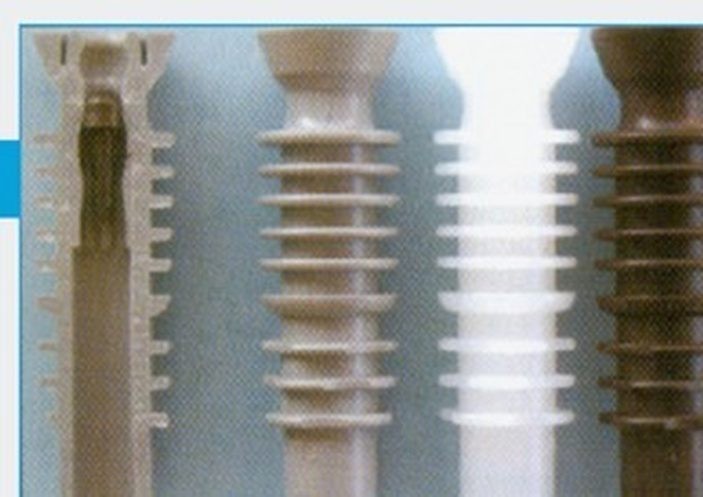 INIETTORI MABIInjection packer for masonryFibres and accessoriesINJ-M12 / M14 / M18
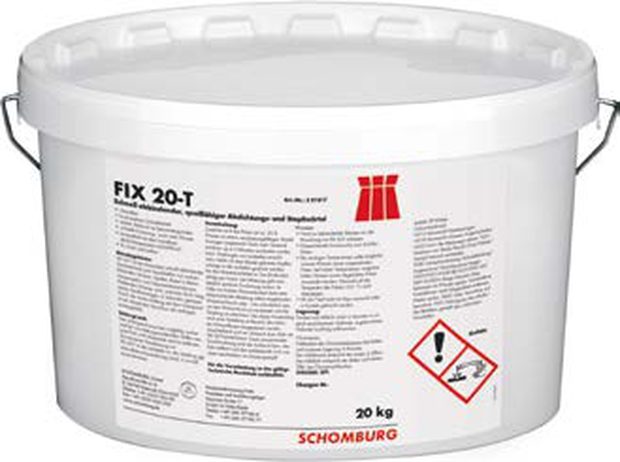 FIX-20-TFast-setting expanding plugging mortar for the immediate stop of active leaksWaterproof slurries and mortarsSistema BETOCRETE-C · TamponamentoSchomburg
Frequently asked questions
Can you inject only with the two-component elastic resin, skipping the first stage?
Only if the crack is dry. On a crack conducting water, the elastic resin would be washed out before curing.
Is injection a structural repair?
Elastic polyurethane resins seal, they do not stitch. Restoring structural continuity requires rigid epoxy resins and a specific design assessment.
Continue reading
Crystallisation
Concrete becomes waterproof from within: crystals grow in the pores and capillaries, and r…
Osmotic slurries
Mineral coatings that work by adhering to the substrate, compatible with concrete because …
Fibres for concrete
They do not replace reinforcement. They control plastic-shrinkage cracking, which is a dif…