

Damp masonry restoration and water repellency
Stopping water rising in walls, neutralising salts, letting masonry breathe. And protecting facades from rain without changing their appearance.
In this sectionChemical barrier against rising damp, salt treatment, WTA restoration render and silane water repellents for concrete and facades.
Values declared in the product data sheets (Probar Italia 2026 catalogue and Schomburg technical data sheets). For complete and up-to-date values, the manufacturer's data sheet prevails.
The problem: water and salts in masonry
Groundwater rises by capillary action in masonry and carries soluble salts with it. As it evaporates, the salts crystallise on the surface and in the pores: render crumbles, paint peels, efflorescence appears. A lasting restoration works on three fronts, in this order: stop the rising damp, treat the salts, apply a render able to host them.
1. The horizontal barrier
It is created by injecting into the masonry, through a row of holes at the base of the wall, a silane-based cream that migrates into pores and capillaries and forms a permanent water-repellent barrier. AQUAFIN-i380 is single-component, ready to use, applied without pressure and WTA-certified up to 95% masonry moisture. NANO-BLOCK HP is a thixotropic gel based on silane monomer that does not run out of horizontal holes, suitable for brick, stone, mixed or rubble-core masonry. Both preserve vapour permeability.
2. Salts and the render
ESCO-FLUAT, a water-based hexafluorosilicate solution, converts chlorides and sulphates into insoluble compounds and prevents early efflorescence on new renders. THERMOPAL-ULTRA-WHITE is a fast-setting WTA restoration render: its high air content allows thicknesses up to 30 mm in a single coat; it is sulphate resistant, breathable, with a white surface, and can be floated after about 90 minutes.
3. Facades: water repellency without a film
Silane impregnations penetrate the substrate without forming a film: driving rain is not absorbed, vapour keeps passing through. ASOLIN-SFC45 is a ready-to-use cream for facades and exposed concrete, colourless after drying, in a single pass (100–200 ml/m²). PRO HYDROSIL is a low-VOC water-based emulsion, dilutable from 5 to 30%, for spray impregnation of facades and for injection.
What it does not do
The chemical barrier stops water rising by capillary action: it does not stop pressurised water or lateral seepage from an embankment, which require waterproofing on the water side. The water repellent protects from rain but does not close cracks: those must be repaired first.
Products for this system
Selected from the Probar 2026 catalogue for this technology.
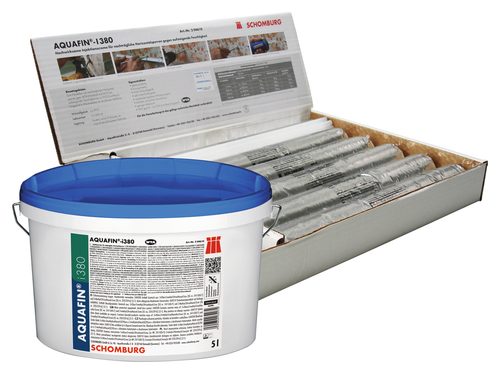 AQUAFIN-i380Injection cream for a horizontal barrier against rising dampRenovation rendersArt. 204610Schomburg
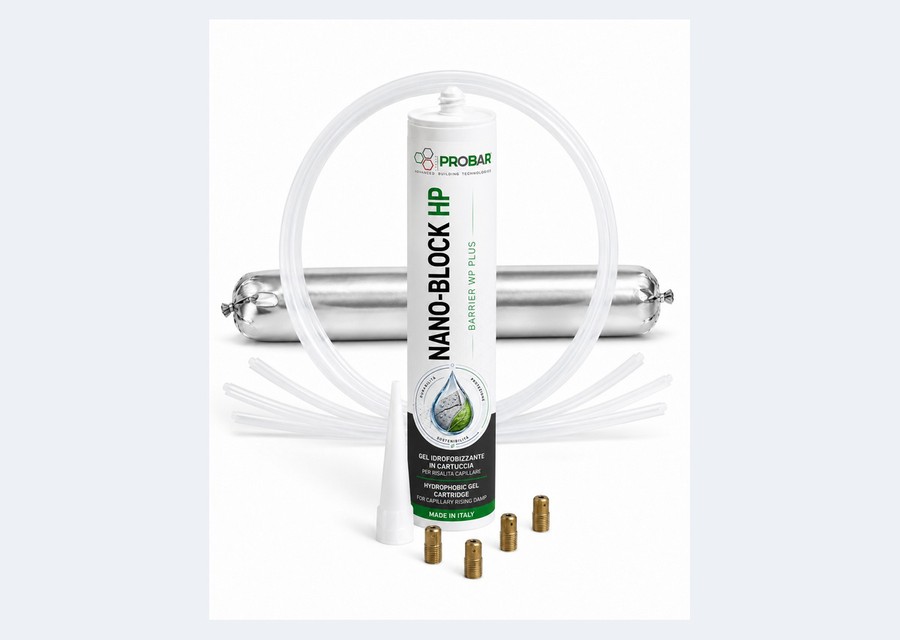 NANO-BLOCK HPHigh-penetration thixotropic silane gelRenovation rendersPNBHP-310 / 5K / 16K
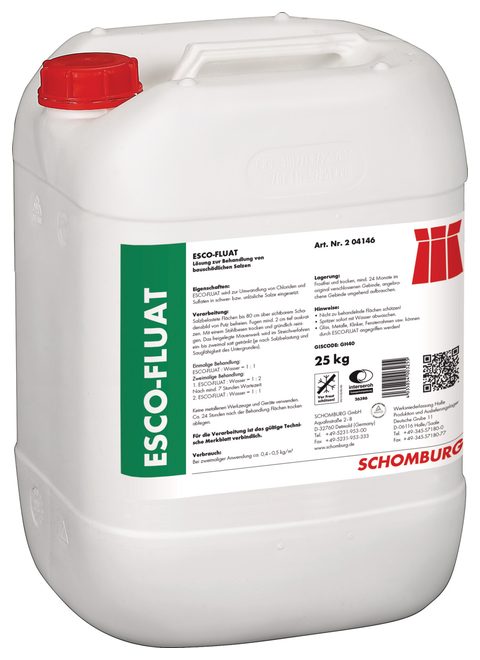 ESCO-FLUATSolution for treating structurally damaging saltsRenovation rendersArt. 204146Schomburg
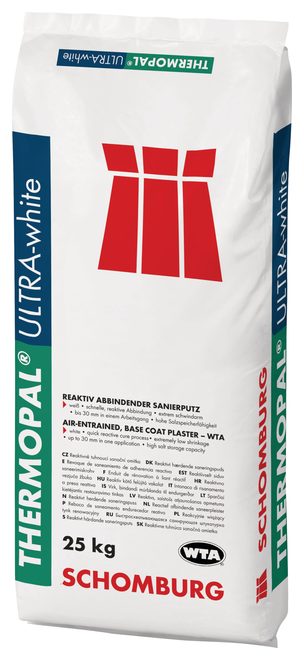 THERMOPAL-ULTRA-WHITEWTA rapid-setting restoration plaster, whiteRenovation rendersArt. 201492Schomburg
 ASOLIN-SFC45Deep-acting hydrophobic cream for facadesRenovation rendersArt. 201247Schomburg
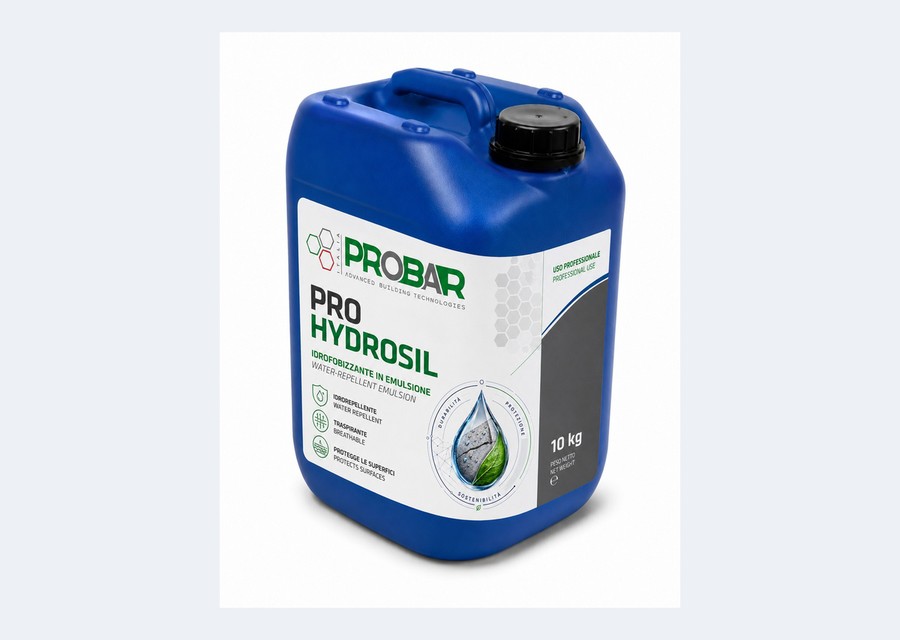 PRO HYDROSILLow-VOC silane hydrophobic emulsionRenovation rendersPHS-10 / PHS-25
Brochures to download
Technical and commercial documentation for this technology.
Where it is used
The solutions for which the products of this technology are listed in the catalogue.
Frequently asked questions
How much product does the horizontal barrier need?
The consumption of AQUAFIN-i380 varies with the wall thickness: the figure to use is the one given in the data sheet.
Why a restoration render and not an ordinary render?
Because residual salts keep crystallising. A WTA restoration render such as THERMOPAL-ULTRA-WHITE is designed to host them in its inner pores while keeping the surface dry, whereas a traditional render deteriorates.
Does a water repellent change the look of the facade?
ASOLIN-SFC45 is colourless after drying, dries tack-free and does not alter the appearance of the substrate.