

Reinforced concrete repair
Spalling cover concrete is not a cosmetic issue: it is the visible symptom of a process eating away the reinforcement. Repairing means stopping that process, not covering it.
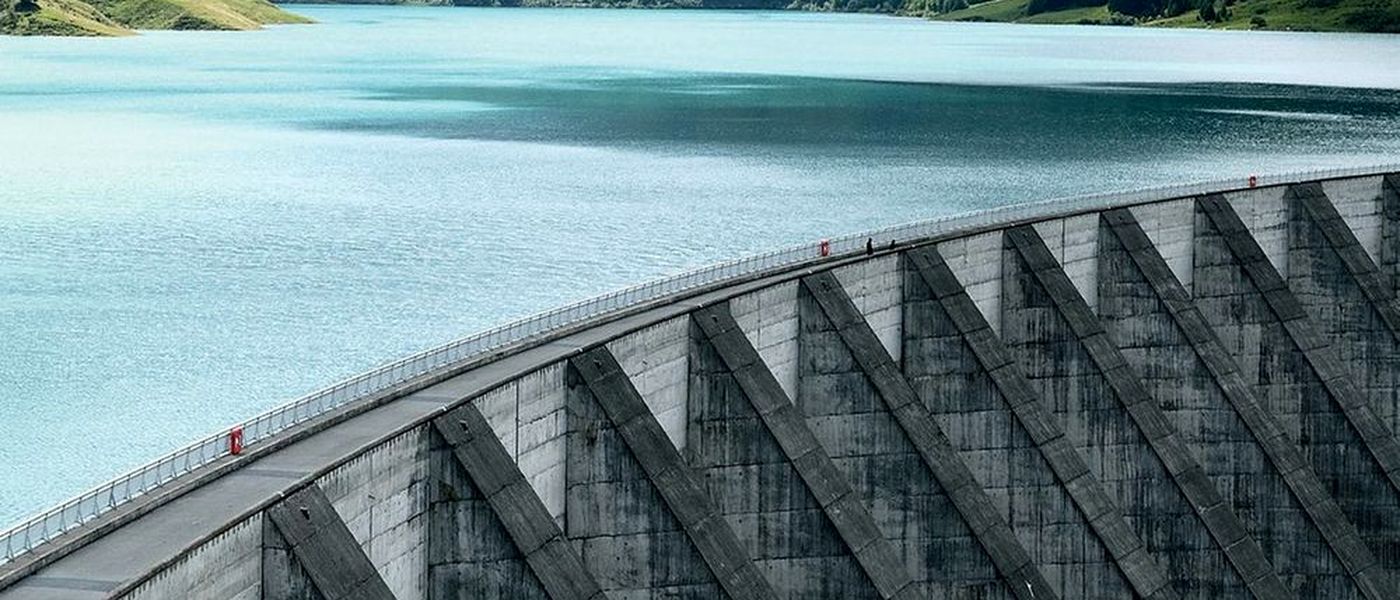
Why concrete degrades
The reinforcing steel is protected by the strongly alkaline environment of the concrete, which forms a passivating layer on its surface. Two phenomena destroy this protection: carbonation, i.e. the reaction of atmospheric carbon dioxide with the lime in the cement, which lowers the pH; and chloride penetration, typical of marine environments and structures treated with de-icing salts.
Once the passivating layer is lost, the steel oxidises. Rust occupies a volume many times greater than the steel it comes from, and that expansion pops the cover concrete off from the inside. By the time the crack is visible, the process is already well advanced.
The standard's pathway
UNI EN 1504 organises the intervention into principles and methods: once the degradation mechanism is identified, the principle of intervention is chosen, and from that the method and the product class. This is not bureaucracy: it is what makes the repair verifiable and what a site management team can demand.
Repair mortars are classified by strength into R1, R2, R3 and R4, where R4 indicates the structural class. Subsequent surface protection falls under part 2 of the standard and is what prevents the degradation from starting again.
The correct sequence
All degraded concrete is removed down to sound material, exposing the reinforcement around its full perimeter. The bars are wire-brushed to bright metal and passivated. The section is rebuilt with a structural mortar of the required class. Finally, an anti-carbonation protective coating is applied: without it, the cycle starts again, more slowly but just as inexorably.
If the substrate is damp — an ordinary condition on below-grade or exposed structures — a moisture-tolerant epoxy primer is needed before any coating.
The degradation cycle and the UNI EN 1504 repair sequence
Products for this system
Selected from the Probar 2026 catalogue for this application.
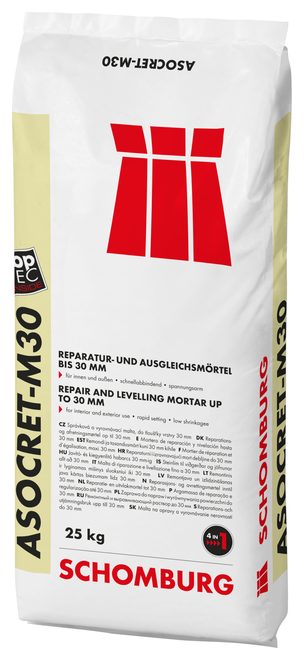 ASOCRET-M30Waterproof multi-purpose mortar up to 30 mm — 4 in 1Concrete repairArt. 205539Schomburg
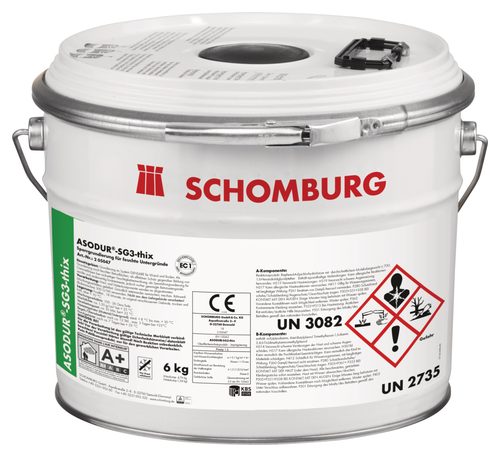 ASODUR-SG3-THIXThixotropic epoxy barrier primer for damp substratesConcrete repairArt. 205047Schomburg
 ASOLIN-SFC45Deep-acting hydrophobic cream for facadesRenovation rendersArt. 201247Schomburg
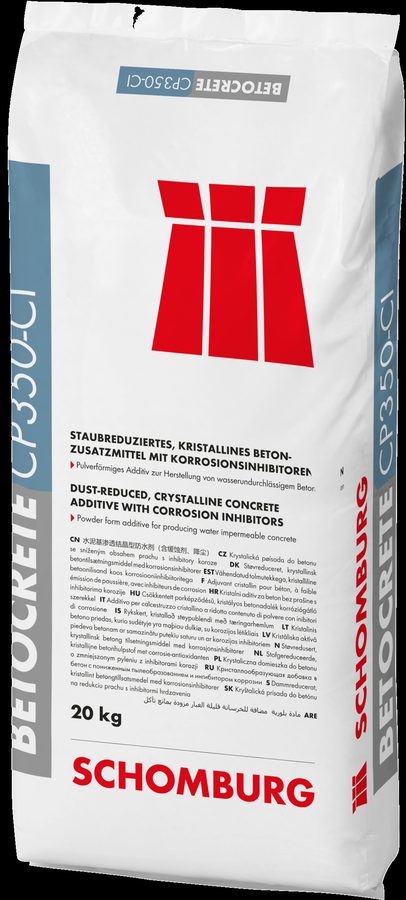 BETOCRETE-CP350-CIPowder waterproofing admixture with crystalline technology and anti-corrosion actionConcrete admixturesArt. 206456Schomburg
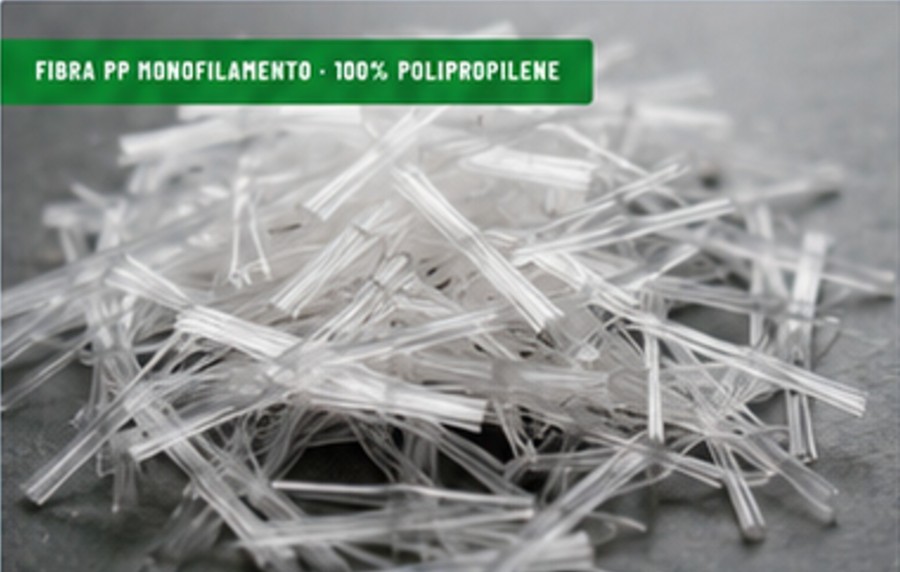 POLYMONOPolypropylene synthetic fibre for concrete reinforcementFibres and accessoriesPMF-03 / PMF-06 / PMF-12 / PMF-18
Frequently asked questions
How do you tell if concrete is carbonated?
With the phenolphthalein test on a freshly broken surface: the still-alkaline area turns pink, the carbonated area stays colourless. The depth of the colourless front, compared with the cover thickness, shows how far the process has advanced.
Is it enough to redo the cover concrete without treating the bars?
No. If the reinforcement stays oxidised, corrosion continues under the new mortar and pops it off again within a few years. Passivating the steel is the part of the repair that cannot be seen and that determines how long everything else lasts.
Is R4 mortar needed even for a balcony edge repair?
Not always. R4 is required where the repair has a structural function. For shallow, non-load-bearing repairs, lower classes can be enough, provided they are waterproof and sulphate-resistant.
Continue reading
White tank
The concrete structure is itself the waterproofing. No membrane to lay, no sheet to protec…
Retaining wall in groundwater
When a below-grade structure sits in groundwater, hydrostatic pressure is permanent and ac…
Leaking basement
The room is built, the backfill is done, and water gets in. The work is carried out from t…
Rising damp in masonry
Water rises from the ground through the capillaries of the masonry and stops where it evap…