

White tank
The concrete structure is itself the waterproofing. No membrane to lay, no sheet to protect: watertightness is decided at the batching plant and at the joints.
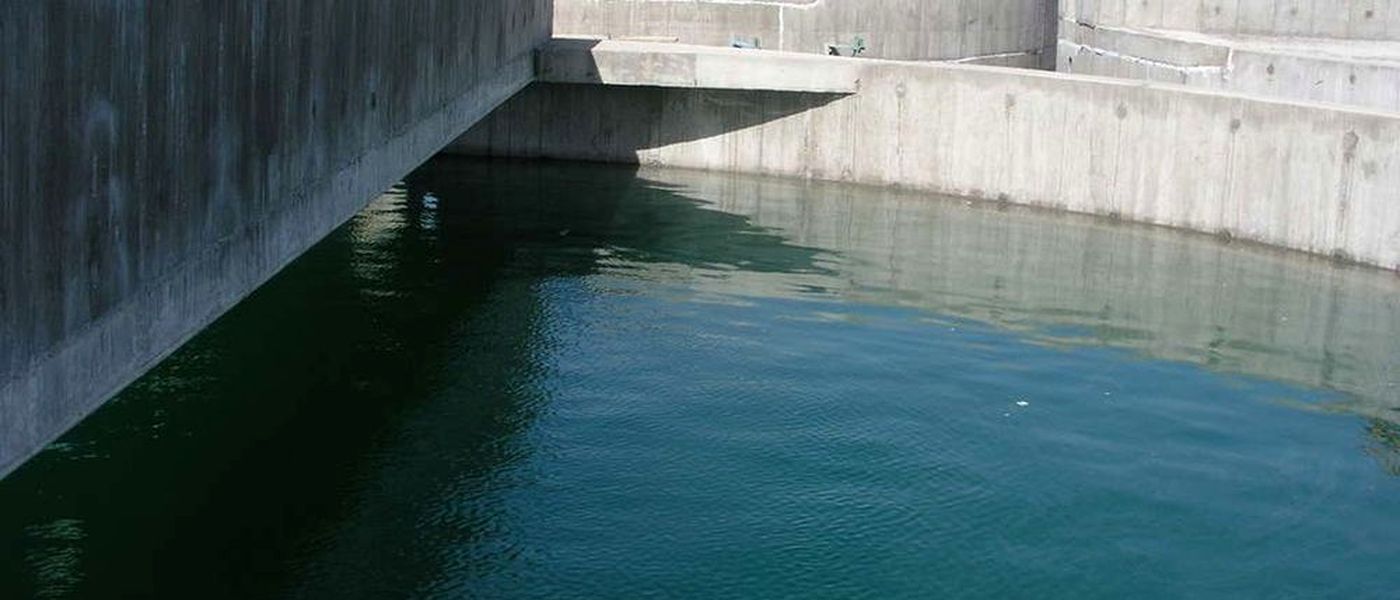
What a white tank is
A white tank is a below-grade reinforced concrete structure that performs both the load-bearing function and the waterproofing function at the same time. The term translates the German Weiße Wanne and stands in contrast to the black tank, where waterproofing is entrusted to an external bituminous membrane.
The advantage is not theoretical. An external membrane, once the structure is built, is no longer reachable: if it fails at one point, water migrates between the sheet and the concrete and the point where it gets in does not match the point where the leak shows up inside. In a white tank there is no cavity, so there is no migration: where the water enters is where you intervene.
Where the structure actually leaks
Compact concrete, in itself, is not the problem. The paths water takes are three, and they are all discontinuities: the construction joints between slab and walls and between the walls themselves, the pipe and conduit penetrations, and the holes left by the formwork spacers.
Every white-tank project is therefore first and foremost a project of details. Concrete quality is the necessary condition; watertightness is decided by the joints.
The complete system
The concrete is made waterproof in the mass with the BETOCRETE-CP360-WP crystalline admixture, dosed in powder form at the batching plant. Its "2 in 1" crystalline technology combines permanent waterproofing with an immediate hydrophobic action: the active ingredients react with moisture and the free lime in the concrete, generating insoluble crystals that occlude pores and capillaries, and they reactivate every time a crack lets in new moisture — this is the self-healing mechanism, declared up to 0.4–0.5 mm of opening. Certified as a sealing agent to EN 934-2:T9, suitable for contact with drinking water.
Construction joints are fitted with waterstops: active crystalline steel sheets, water-swellable joints of sodium bentonite and butyl rubber, or extrudable water-swellable polyurethane sealants where the geometry is irregular. Penetrations are sealed with water-swellable caps and gaskets. Active water ingress, if it appears, is plugged with fast-setting expanding mortar.
The watertightness test
A white tank is tested for watertightness, and the test should be planned into the specification together with the system. This is the moment when the choice of details proves right or wrong, and it is best if the material supplier is involved before the pour, not after.
Section of a white tank: the three points where watertightness is decided
Products for this system
Selected from the Probar 2026 catalogue for this application.
 BETOCRETE-CP360-WPPowder waterproofing admixture with crystalline technology and hydrophobic propertiesConcrete admixturesArt. 206446Schomburg
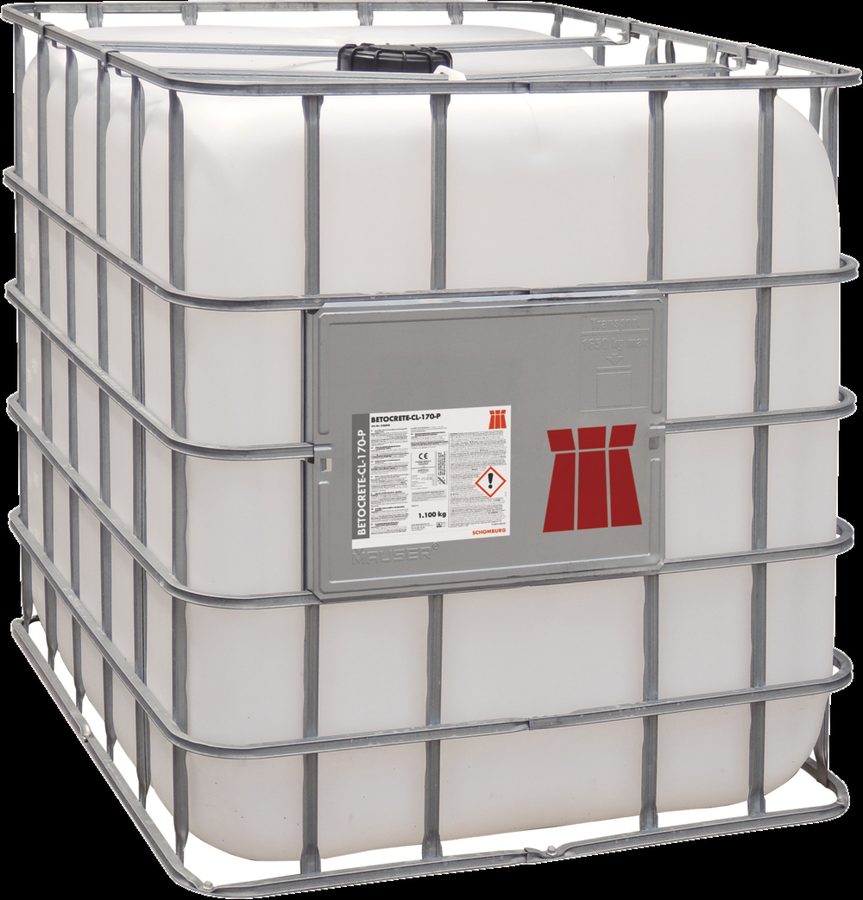 BETOCRETE-CL170-PLiquid waterproofing admixture with crystalline technology and plasticising propertiesConcrete admixturesArt. 206443Schomburg
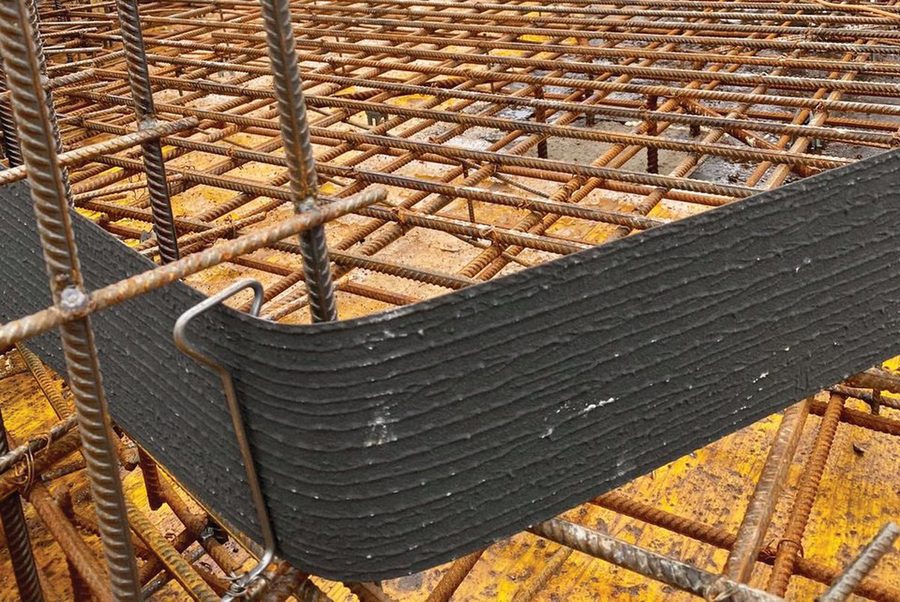 AQUAFIN-CJ5Active crystalline waterstop sheet, in galvanised steel coated on both sidesWaterstops and construction jointsSistema BETOCRETE-CSchomburg
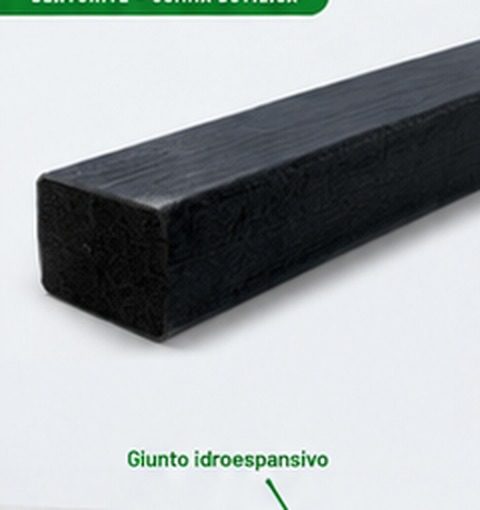 PRO WSWater-swellable bentonite waterstopWaterstops and construction jointsPRO WS
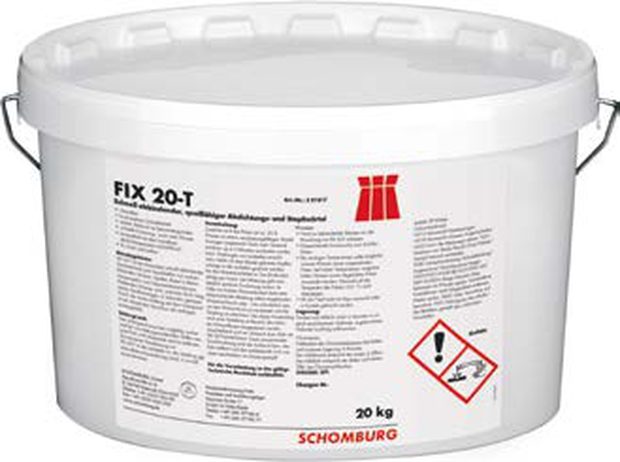 FIX-20-TFast-setting expanding plugging mortar for the immediate stop of active leaksWaterproof slurries and mortarsSistema BETOCRETE-C · TamponamentoSchomburg
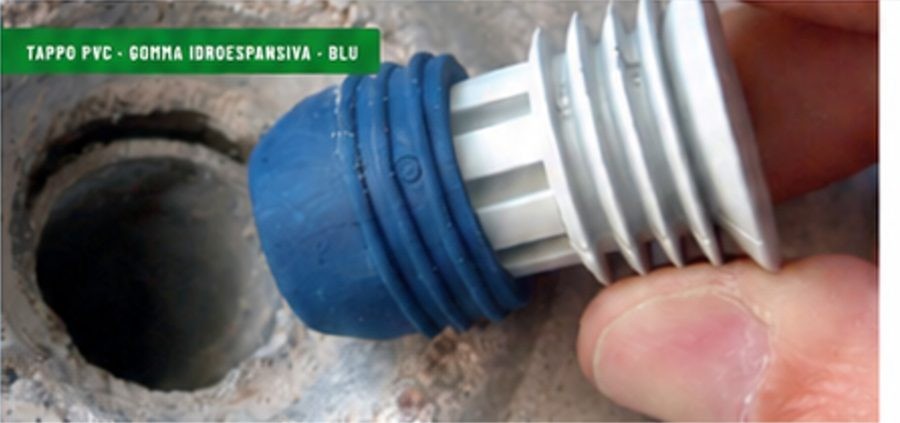 TAPPI CKSWater-swellable rubber caps for PVC spacersFibres and accessoriesCKS T21-T34
Frequently asked questions
White tank or black tank: which is better?
It depends on future accessibility and site schedule. The white tank removes the need to lay and protect the membrane, so it shortens the schedule, and it stays repairable from the inside for the whole life of the structure. The black tank remains preferable when the structure cannot be designed to limit crack width.
Is the crystalline admixture added at the mixer or at the plant?
At the batching plant, where dosing is controlled and mixing is complete. The dosage is expressed as a percentage of cement weight and varies with the water/cement ratio.
Is the waterstop still needed if the concrete is waterproof?
Yes. The admixture makes the mass of the pour waterproof, not the discontinuity between two successive pours. The construction joint is an interface, and must be treated as such.
Continue reading
Retaining wall in groundwater
When a below-grade structure sits in groundwater, hydrostatic pressure is permanent and ac…
Leaking basement
The room is built, the backfill is done, and water gets in. The work is carried out from t…
Reinforced concrete repair
Spalling cover concrete is not a cosmetic issue: it is the visible symptom of a process ea…
Rising damp in masonry
Water rises from the ground through the capillaries of the masonry and stops where it evap…