

Waterstops for construction joints and spacers
The construction joint is the weak point of every underground structure. The waterstop, confined between the two pours, seals it from within.
In this sectionBentonite and hydro-swelling joints, self-expanding thermoplastic strip, crystalline waterstop sheet, hydro-swelling sealant, plugs and gaskets for formwork spacers.
Values declared in the product data sheets (Probar Italia 2026 catalogue and Schomburg technical data sheets). For complete and up-to-date values, the manufacturer's data sheet prevails.
Why the construction joint is critical
Every time a pour stops and resumes, an interface remains between the hardened and the fresh concrete. Even with excellent concrete, that surface is a preferential path for water: this is why horizontal and vertical construction joints in underground structures must always be treated with a dedicated element.
Three working principles
Hydro-expansion. Sodium-bentonite profiles (PRO WS, PRO WS PLUS) and the AQUAFIN-CJ6 thermoplastic strip increase in volume on contact with water. Confined between pours, they build up a contact pressure that seals the joint and, as they swell, penetrate nearby cracks and voids: the self-injecting effect declared in the data sheets.
Longer water path and crystallisation. The AQUAFIN-CJ5 sheet, in galvanised steel coated on both sides, works differently: it lengthens the water path, bonds to the concrete through its cementitious coating and, with its crystalline coating, seals cracks up to 0.4 mm on contact with water.
Hydro-expansive paste sealant. PRO FLEX 300 is extruded with a standard gun onto connections, holes, voids and irregular joints where a preformed profile does not fit: when dry it returns to its original size, on contact with water it expands (+100% at 7 days).
Singular points: formwork spacers
Spacer tubes run through the entire wall and are, after construction joints, the second cause of localised leaks. CKS PLUGS seal PVC spacers with a hydro-expansive rubber cap (tested under negative pressure up to 5 bar); RINGSEAL T21 is the external gasket fitted around CKS T21 tubes.
What it does not do
The waterstop seals the joint, not the mass of the concrete: in a white tank it must be combined with watertight concrete, for example with a crystalline admixture. A hydro-expansive profile must stay confined within the pour, with the concrete cover stated on the data sheet: if it swells before pouring or is not confined, it loses effectiveness. This is why PRO WS PLUS has a rain-protection coating that slows premature swelling for 2-3 days.
Products for this system
Selected from the Probar 2026 catalogue for this technology.
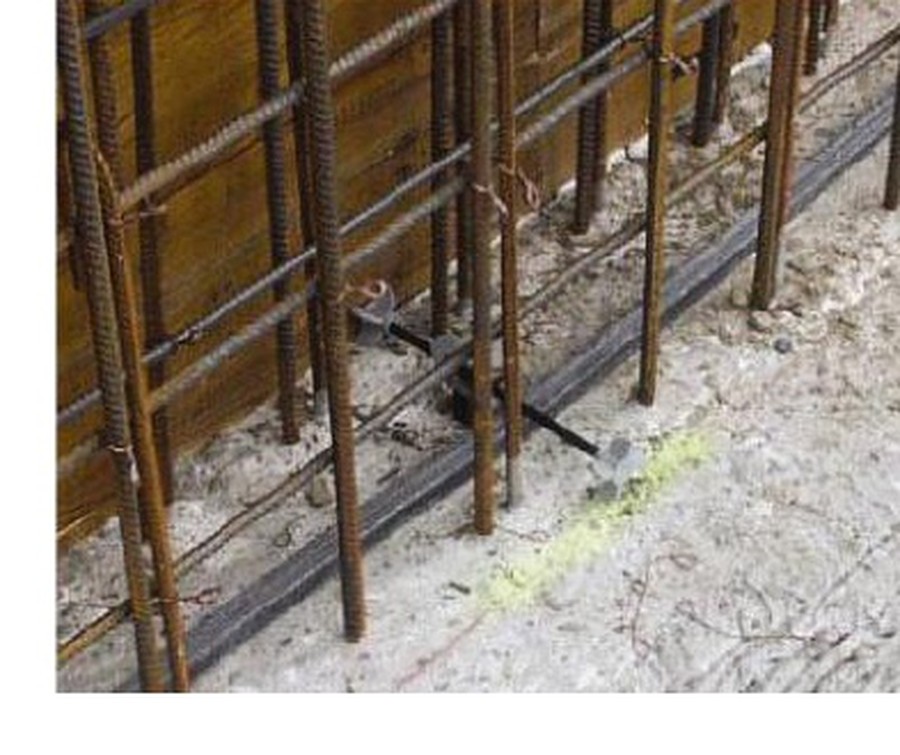 PRO WS PLUSWater-swellable bentonite waterstop with rain-resistant coatingWaterstops and construction jointsPRO WS PLUS
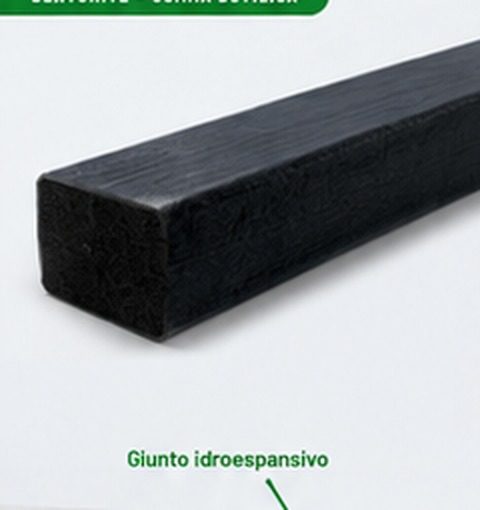 PRO WSWater-swellable bentonite waterstopWaterstops and construction jointsPRO WS
 AQUAFIN-CJ6Thermoplastic swellable waterstop tape for construction jointsWaterstops and construction jointsArt. 207222Schomburg
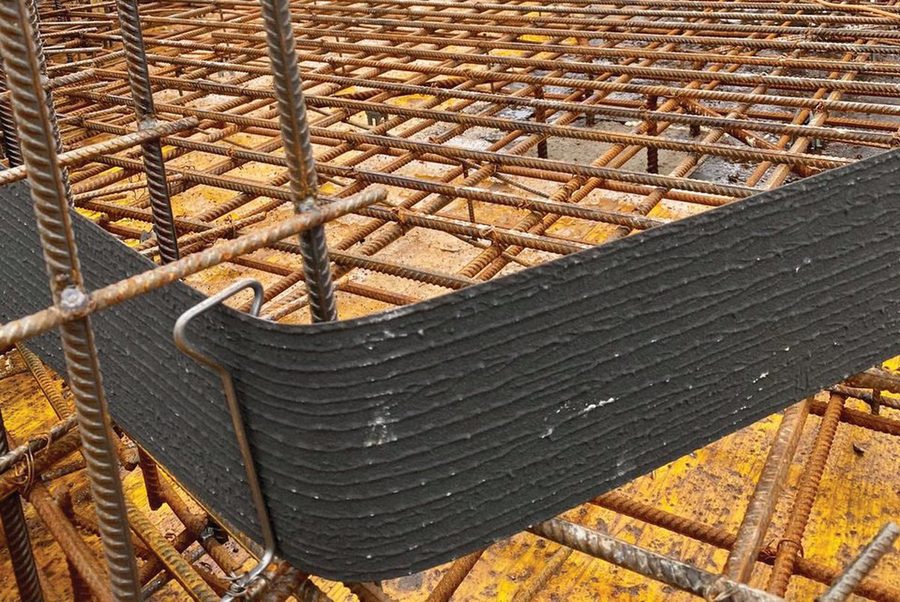 AQUAFIN-CJ5Active crystalline waterstop sheet, in galvanised steel coated on both sidesWaterstops and construction jointsArt. 205470Schomburg
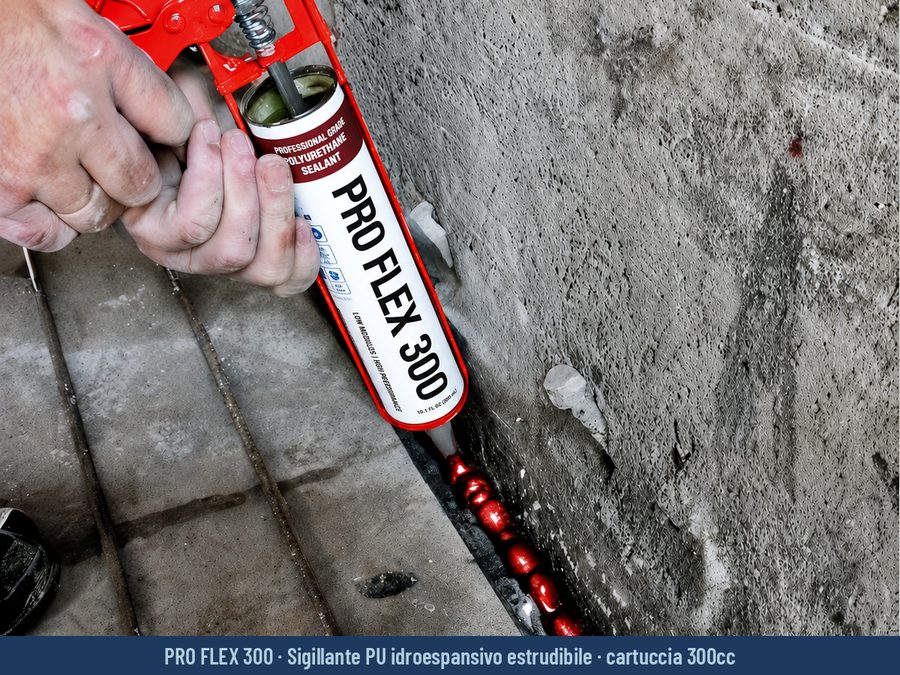 PRO FLEX 300Waterstop · extrudable water-swellable PU sealantSealants and tapesPRFX3
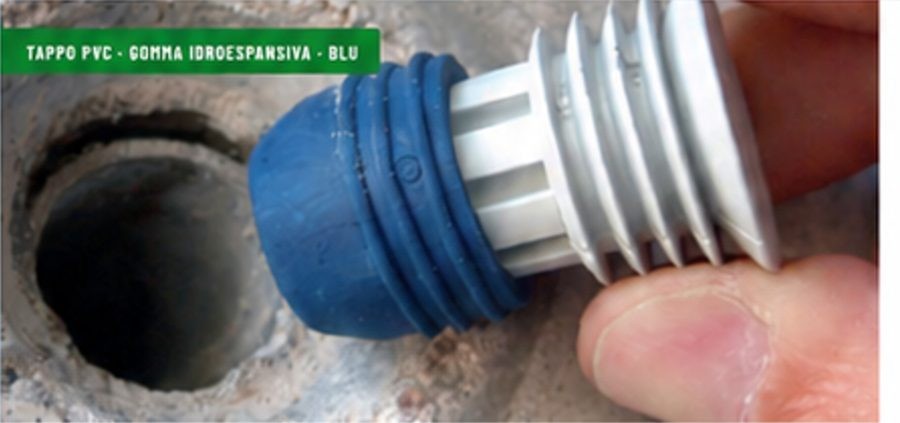 TAPPI CKSWater-swellable rubber caps for PVC spacersFibres and accessoriesCKS T21-T34
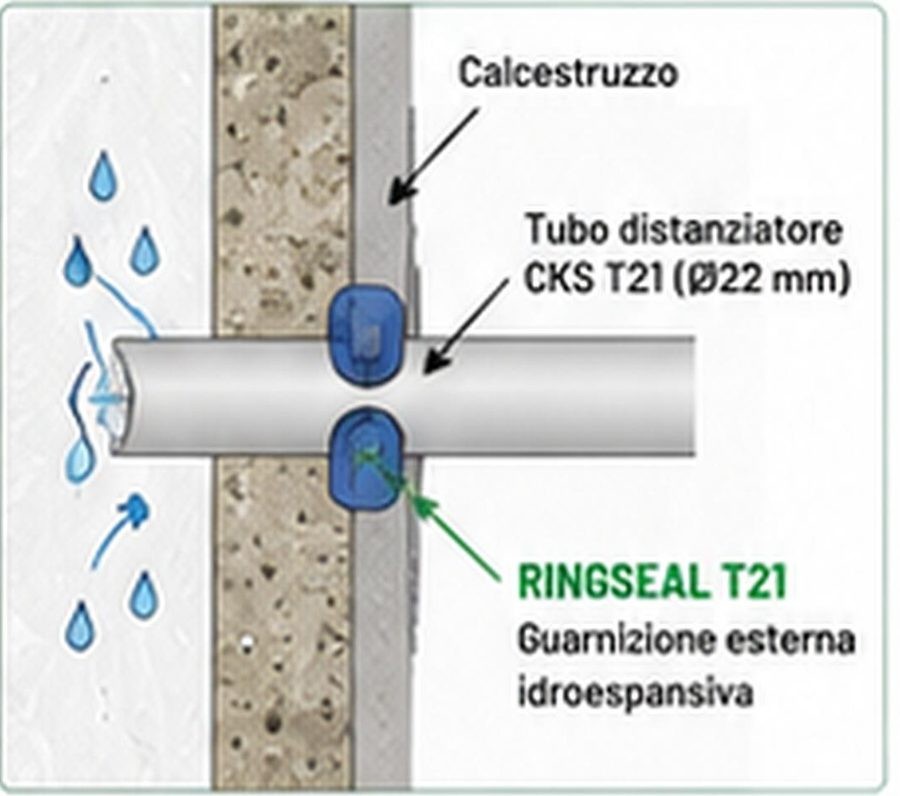 RINGSEAL T21External gasket for formwork spacer tubesFibres and accessoriesRINGSEAL T21
Brochures to download
Technical and commercial documentation for this technology.
Where it is used
The solutions for which the products of this technology are listed in the catalogue.
Frequently asked questions
Bentonite or thermoplastic: which one?
Both seal by swelling. The bentonite profile (PRO WS, PRO WS PLUS) is the classic solution for vertical and horizontal joints; the AQUAFIN-CJ6 thermoplastic is dimensionally stable even at high temperatures, tested up to 4 bar and suitable in fresh and salt water. The choice depends on pressure, type of water and installation conditions: the data sheets give the limits of each.
What happens if it rains before pouring?
A traditional bentonite profile may start swelling too early. PRO WS PLUS has a factory-applied rain-protection coating that slows swelling for 2-3 days and is dissolved only by the alkaline environment of fresh concrete.
Can the AQUAFIN-CJ5 sheet be used in drinking water tanks?
Yes: the data sheet declares it suitable for contact with drinking water. Declared watertightness is up to 5 bar with a 15 cm sheet and 2 bar with a 10 cm sheet.