

Rising damp in masonry
Water rises from the ground through the capillaries of the masonry and stops where it evaporates, leaving the salts behind. The chemical barrier interrupts the path without touching the structure.
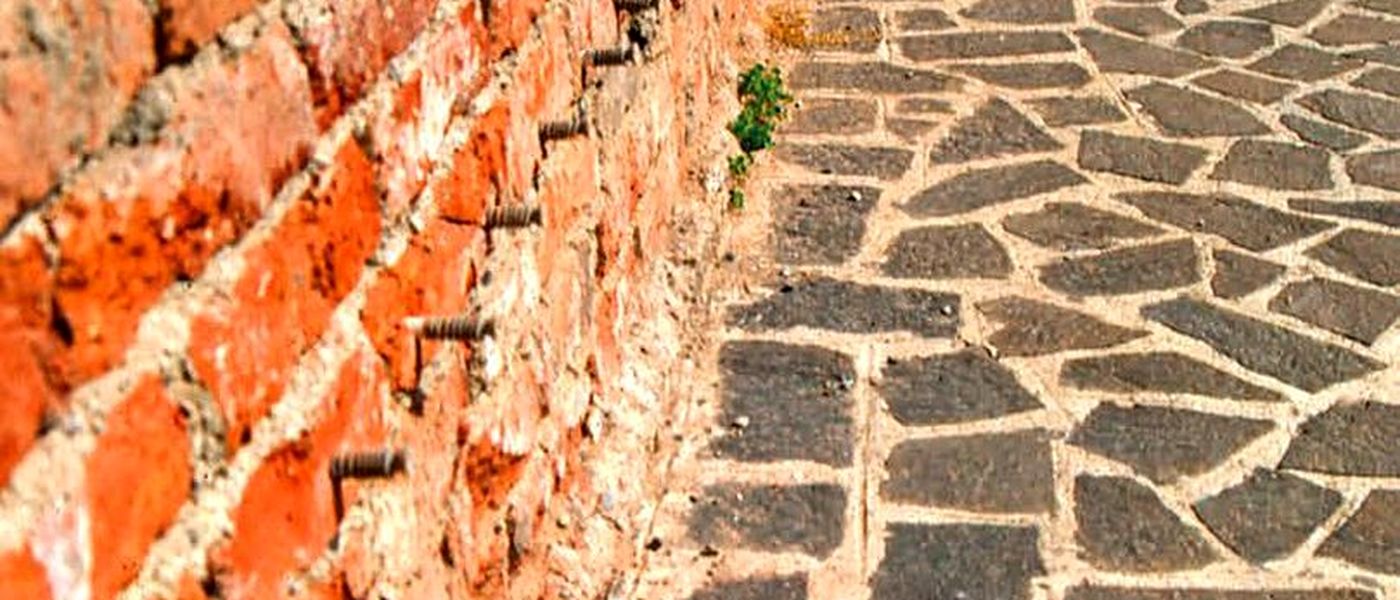
How to recognise it
Rising damp has an unmistakable signature: it starts at the bottom, stops at a fairly constant level, and leaves a band of salt efflorescence and crumbling plaster. It is seasonally stable, unlike condensation, which appears on thermal bridges and varies with how the room is used.
The salts are the trickiest part. Nitrates and sulphates carried by the water crystallise on the surface as the water evaporates, and the pressure of crystallisation breaks up the plaster. A new render applied without treating the salts degrades within months.
Why low-pressure injection
Among the available technologies — mechanical cutting, electro-osmosis, macroporous renders — the low-pressure injected chemical barrier remains the most flexible. It adapts to brick, stone, mixed or cavity masonry, requires no invasive structural work, and allows working from one side of the wall only, preserving existing plaster and frescoes.
The principle: a gel or liquid based on monomeric silane is injected into horizontal holes at the base of the wall, migrates into the pores and capillaries and forms a permanent hydrophobic barrier that blocks rising damp without compromising vapour permeability. The masonry above the barrier can then dry out.
The stages on site
Removal of the degraded plaster and preparation of the wall. Drilling with a 12–16 mm diameter and 10–20 cm spacing along a horizontal line. Insertion of the injectors. Injection of the gel or liquid at low pressure. Treatment of the residual salts with a converting solution, which turns chlorides and sulphates into insoluble compounds. Finally, application of a macroporous renovation render, which accommodates crystallisation inside itself rather than at the surface.
Drying times
The barrier acts immediately, but the wall takes months to dry: roughly one centimetre of thickness per month, depending on thickness, material and ventilation. This is the expectation that must be clarified with the client before starting, because disappointment almost always comes from here.
Chemical injection barrier: how rising damp is stopped
Products for this system
Selected from the Probar 2026 catalogue for this application.
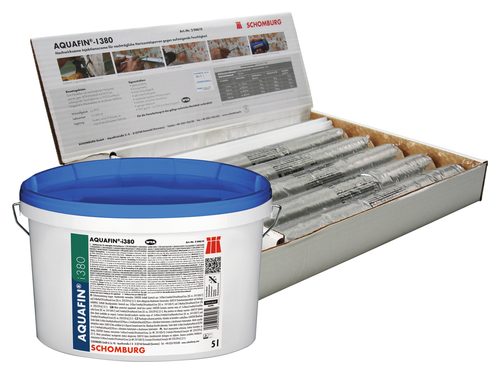 AQUAFIN-i380Injection cream for a horizontal barrier against rising dampRenovation rendersArt. 204610Schomburg
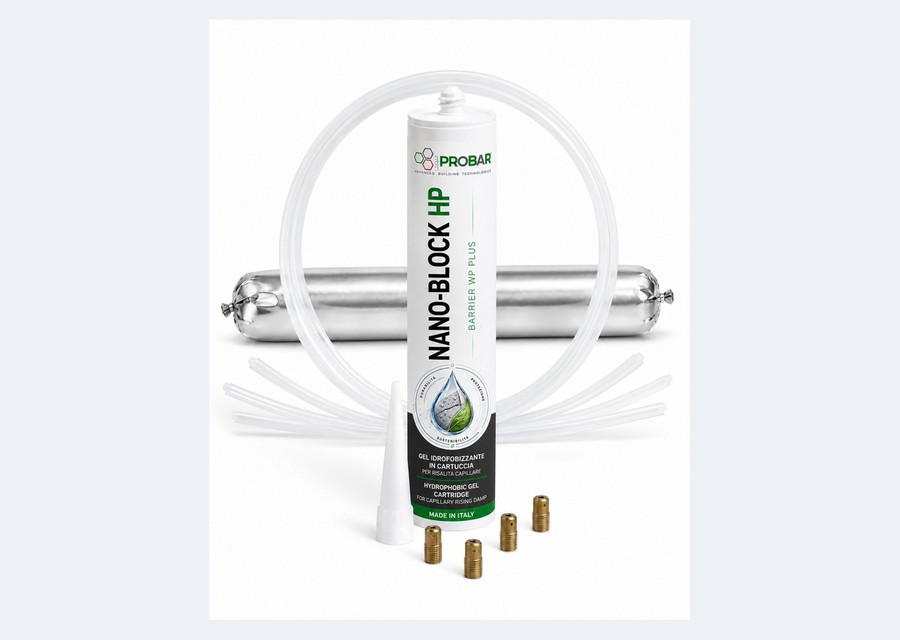 NANO-BLOCK HPHigh-penetration thixotropic silane gelRenovation rendersPNBHP-310 / 5K / 16K
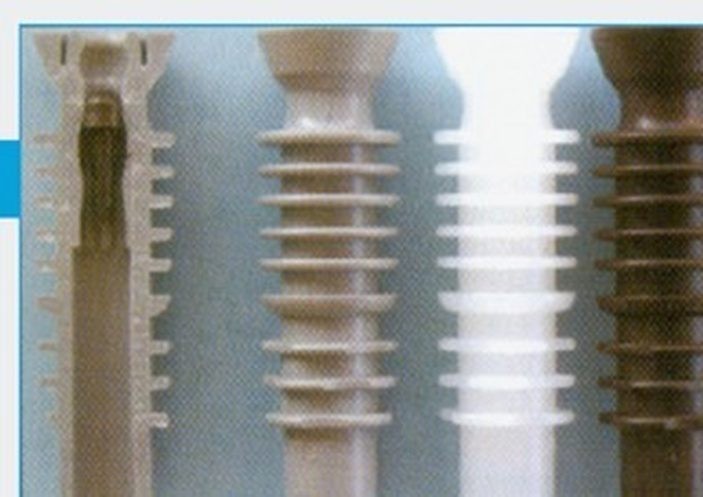 INIETTORI MABIInjection packer for masonryFibres and accessoriesINJ-M12 / M14 / M18
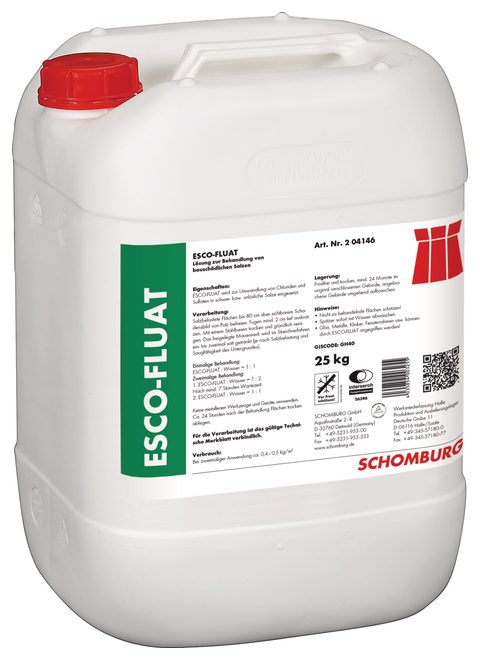 ESCO-FLUATSolution for treating structurally damaging saltsRenovation rendersArt. 204146Schomburg
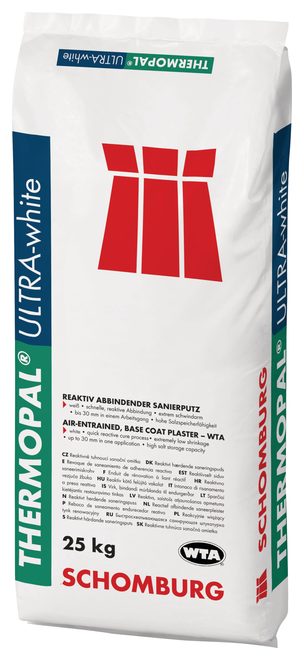 THERMOPAL-ULTRA-WHITERenovation renderRenovation rendersArt. 201492Schomburg
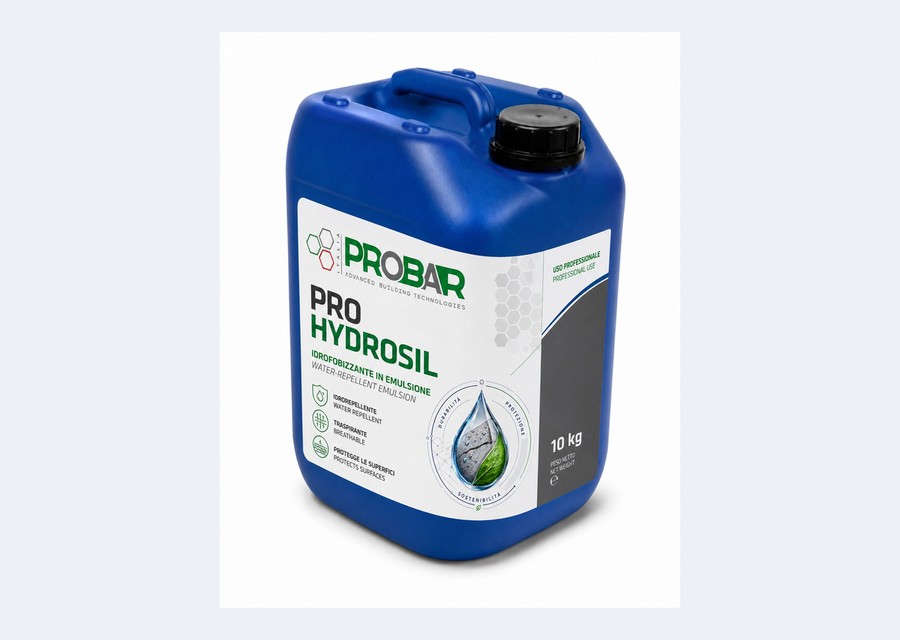 PRO HYDROSILLow-VOC silane hydrophobic emulsionRenovation rendersPHS-10 / PHS-25
Frequently asked questions
Does the chemical barrier work on cavity walls?
Yes, and it is one of the cases where it is preferable to mechanical cutting. The uneven internal fill does, however, call for checking that the holes are properly filled and, sometimes, a second injection.
How long does a chemical barrier last?
The silane reacts with the mineral substrate forming a permanent bond: the barrier is considered definitive. What can degrade instead is the plaster, if the salts were not treated.
Does all the existing plaster need to be removed?
It should be removed to at least 50–80 cm above the visible limit of the damp, because the salts have also settled where the stain is not yet visible.
Continue reading
White tank
The concrete structure is itself the waterproofing. No membrane to lay, no sheet to protec…
Retaining wall in groundwater
When a below-grade structure sits in groundwater, hydrostatic pressure is permanent and ac…
Leaking basement
The room is built, the backfill is done, and water gets in. The work is carried out from t…
Reinforced concrete repair
Spalling cover concrete is not a cosmetic issue: it is the visible symptom of a process ea…