

Tunnels and underground structures
In major underground works, waterproofing is no longer repairable once in service. Every choice must be made knowing it will be final.
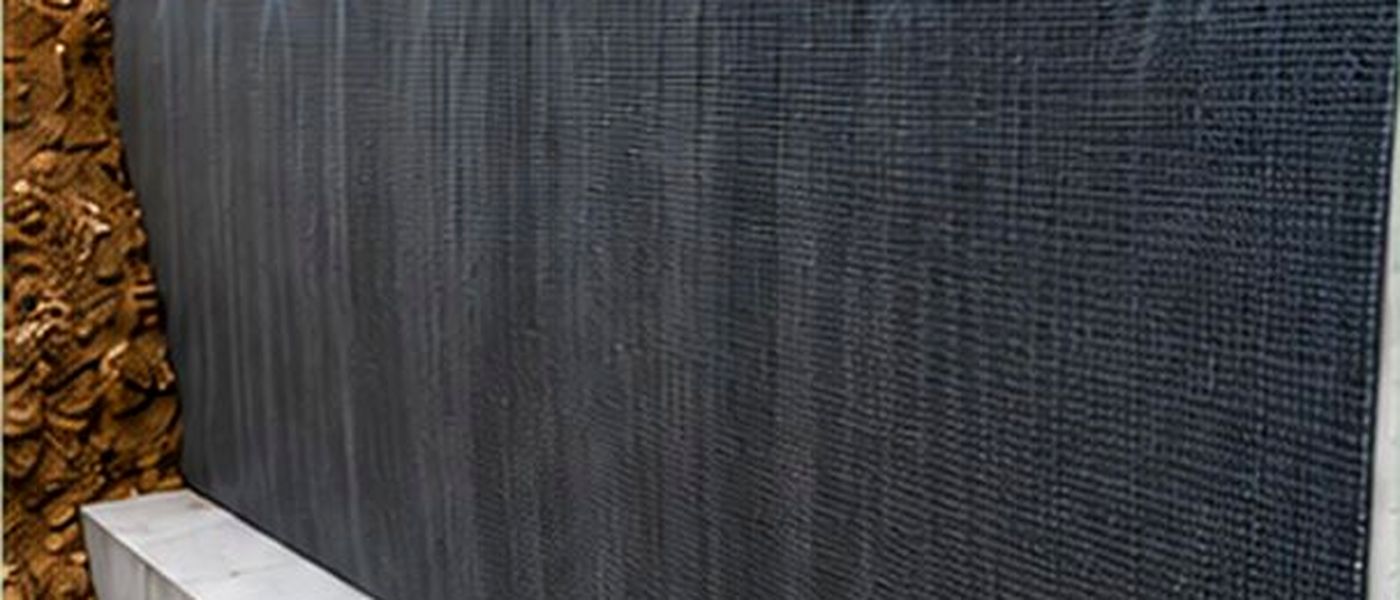
The dominant criterion: irreversibility
On a residential building, a waterproofing mistake can be fixed from the inside. On a metro station or a cut-and-cover tunnel, access to the positive side is lost forever once backfilling is done, and stopping the service for a repair carries costs out of all proportion to the work itself.
This pushes towards redundant systems: not a single barrier, but the combination of concrete made waterproof in the mass, an active system on the positive side, and compartmentalisation that limits the extent of any defect.
Bentonite geocomposites
These are the recurring choice on base slabs and diaphragm walls. Granular sodium bentonite, enclosed between woven and non-woven geotextile, hydrates in a confined way and seals; self-anchoring structures give mechanical adhesion to the concrete poured on top, removing the cavity through which water could migrate. CE marking to EN 13491 with attestation system 2+ is the reference for public-contract supplies.
Compartmentalisation
Dividing the surface into watertight compartments, bounded by waterstops and served by injection tubes, turns a possible leak from a diffuse problem into a local, injectable one. It is a modest expense during construction and the only real insurance on a structure that will no longer be accessible.
Products for this system
Selected from the Probar 2026 catalogue for this application.
 BGC GRIPSelf-anchoring bentonite geocompositeBentonite membranesBGC GG / BGC GP
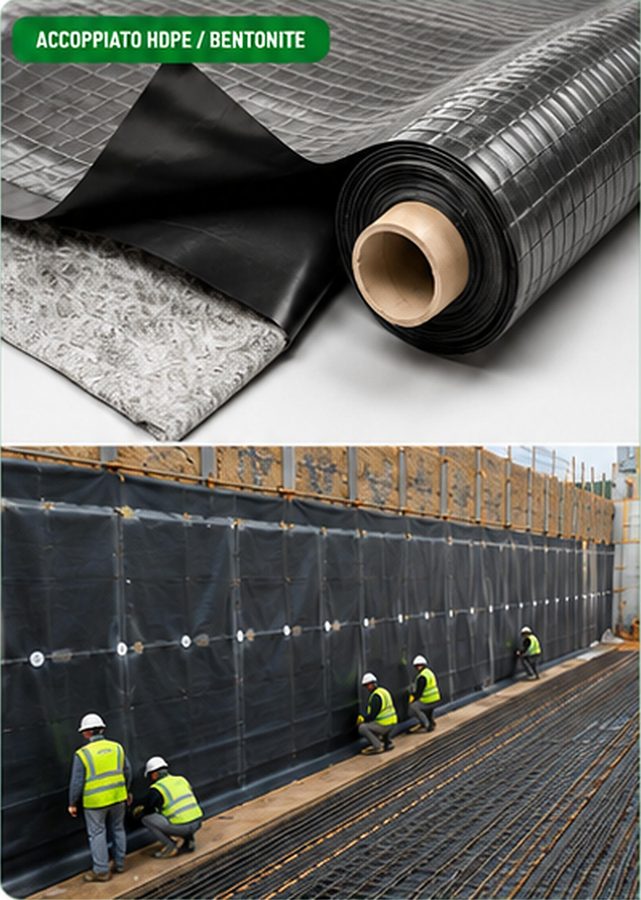 BGC HDPEBentonite geocomposite with HDPE membraneBentonite membranesBGC HDPE GG / GP
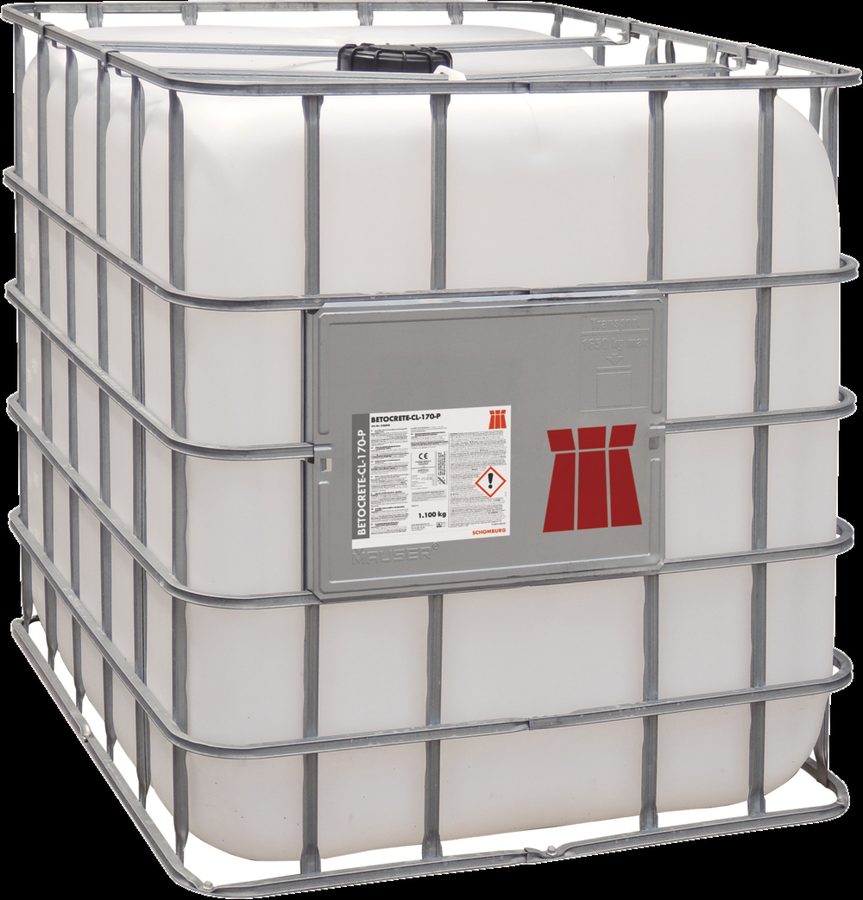 BETOCRETE-CL170-PLiquid waterproofing admixture with crystalline technology and plasticising propertiesConcrete admixturesArt. 206443Schomburg
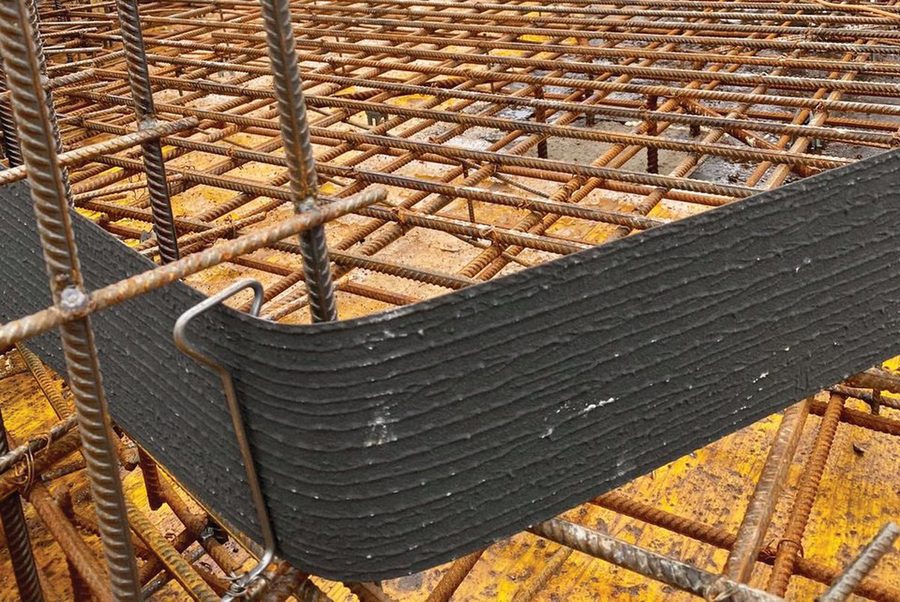 AQUAFIN-CJ5Active crystalline waterstop sheet, in galvanised steel coated on both sidesWaterstops and construction jointsSistema BETOCRETE-CSchomburg
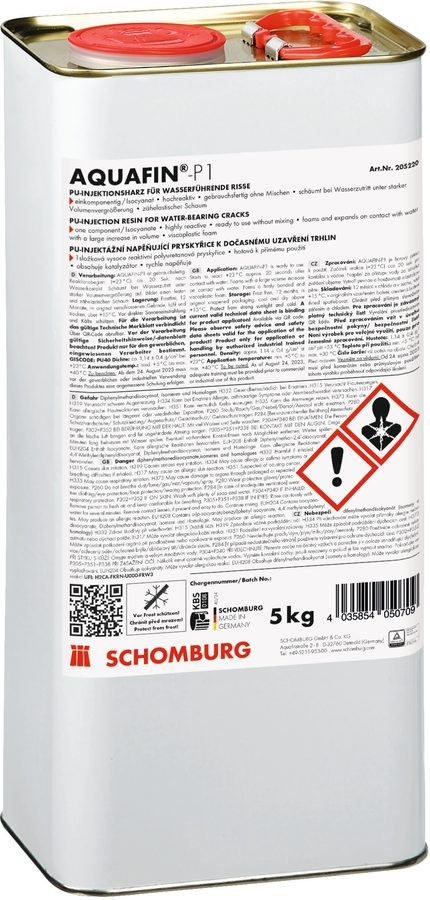 AQUAFIN-P1Expanding polyurethane injection resin — temporary sealingInjection resinsArt. 205220Schomburg
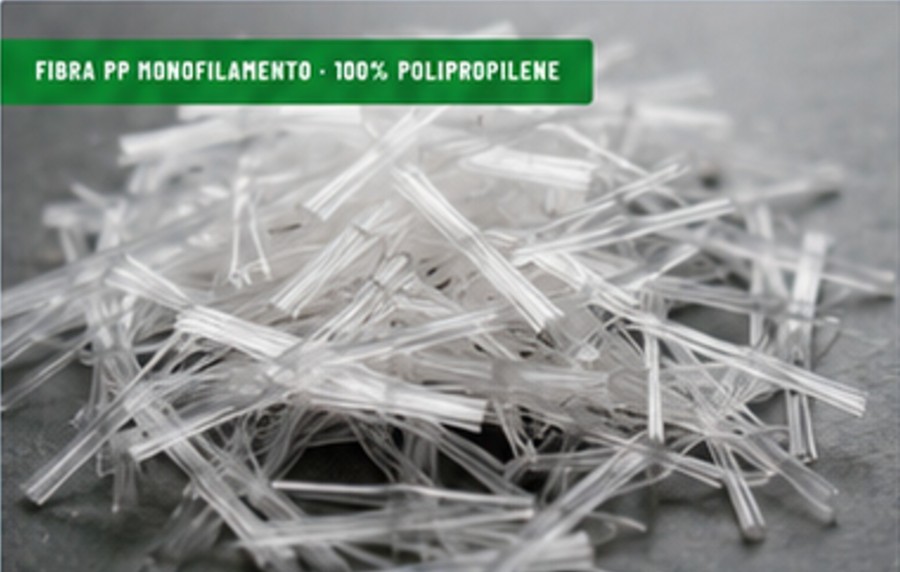 POLYMONOPolypropylene synthetic fibre for concrete reinforcementFibres and accessoriesPMF-03 / PMF-06 / PMF-12 / PMF-18
Frequently asked questions
What is attestation system 2+?
It is the level of verification required by the Construction Products Regulation for certain families: it involves continuous surveillance of factory production control by a notified body, and is normally required in public tenders.
Are bentonite geocomposites laid even below permanent groundwater?
Yes, and that is the condition in which they perform best, provided the swelling is confined by the pour and the overlaps are respected.
Continue reading
White tank
The concrete structure is itself the waterproofing. No membrane to lay, no sheet to protec…
Retaining wall in groundwater
When a below-grade structure sits in groundwater, hydrostatic pressure is permanent and ac…
Leaking basement
The room is built, the backfill is done, and water gets in. The work is carried out from t…
Reinforced concrete repair
Spalling cover concrete is not a cosmetic issue: it is the visible symptom of a process ea…