
Drinking water reservoirs
In drinking-water structures, waterproofing must not just hold: it must be certified for contact with water intended for human consumption.

The constraint that comes before everything else
A coating in contact with drinking water must not release substances into the water, alter its organoleptic properties or encourage microbial growth. The most widespread European technical reference is the German DVGW certification, in particular the W-347 and W-270 worksheets, which assess respectively the release of substances from cementitious materials and microbial growth on surfaces.
This is a requirement that narrows the field drastically: many excellent general-purpose products are not permitted in this context, and verification must be done on the individual product and its specific certificate, not on the family as a whole.
The two routes
The first is making the structure itself waterproof, with a crystalline admixture dosed at the plant and a declared suitability for contact with drinking water: no coating to maintain, no interface that could detach.
The second is an internal coating with a certified crystalline or cementitious slurry, which can also be applied to existing structures and is the obligatory choice when renovating a reservoir already in service.
Scheduled maintenance
Drinking-water reservoirs must be periodically emptied for inspection and cleaning. This is the window in which any work is carried out, and its shortness drives the choice of materials as much as the technical requirements do: speed of return to service matters as much as performance.
Products for this system
Selected from the Probar 2026 catalogue for this application.
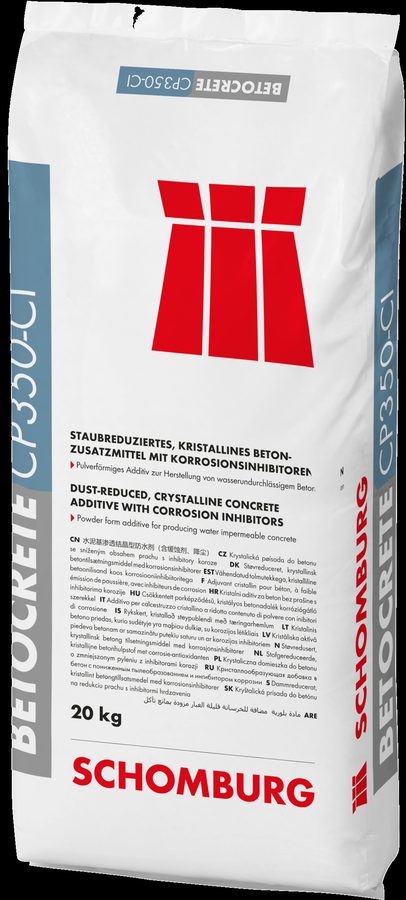 BETOCRETE-CP350-CIPowder waterproofing admixture with crystalline technology and anti-corrosion actionConcrete admixturesArt. 206456Schomburg
 BETOCRETE-CP360-WPPowder waterproofing admixture with crystalline technology and hydrophobic propertiesConcrete admixturesArt. 206446Schomburg
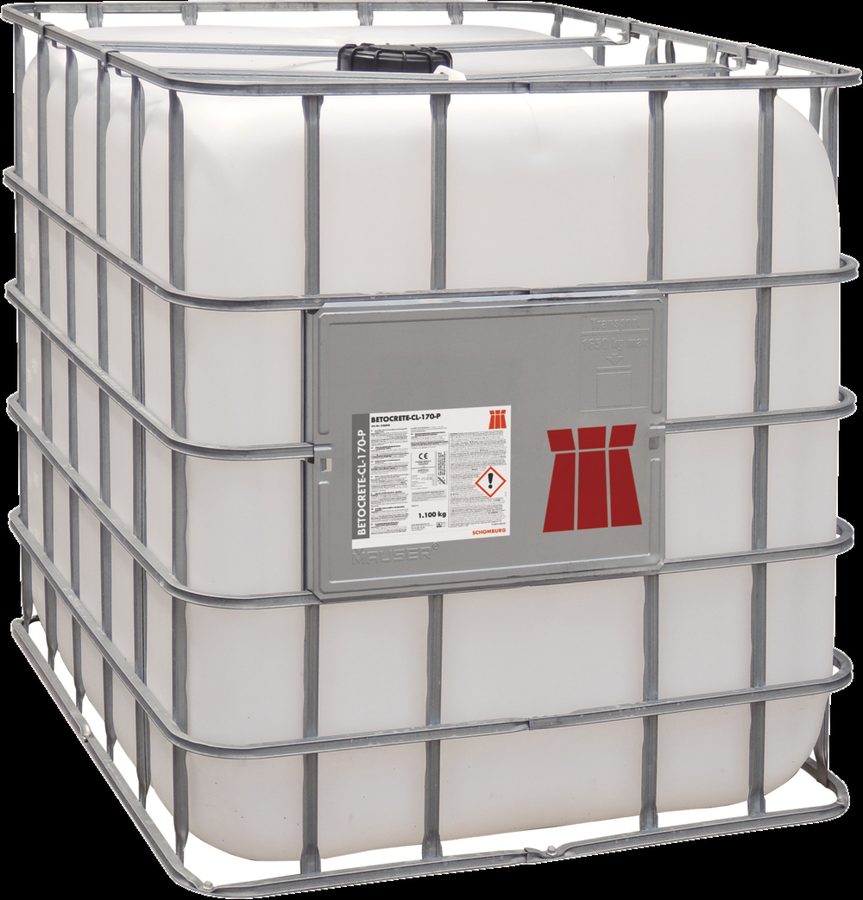 BETOCRETE-CL170-PLiquid waterproofing admixture with crystalline technology and plasticising propertiesConcrete admixturesArt. 206443Schomburg
 AQUAFIN-ICMineral crystalline slurry — permanent structural waterproofingWaterproof slurries and mortars—Schomburg
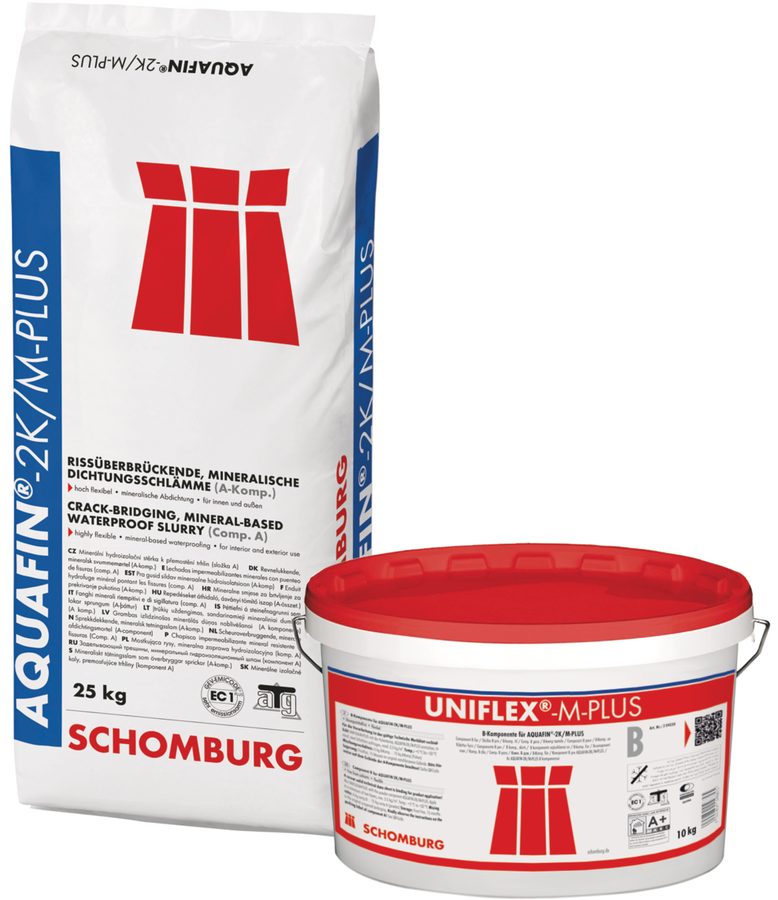 AQUAFIN-2K/M-PLUSFlexible two-component cementitious waterproofing slurryWaterproof slurries and mortarsArt. 204600Schomburg
Frequently asked questions
What is the DVGW W-347 certification?
It is the worksheet of the German gas and water association that governs the hygienic verification of cementitious materials in contact with drinking water, assessing the release of substances into the water.
How long before the tank can be put back into service?
It depends on the product and always involves a rinsing step. The binding figure is on the data sheet and should be agreed with the plant operator before the work.
Continue reading
White tank
The concrete structure is itself the waterproofing. No membrane to lay, no sheet to protec…
Retaining wall in groundwater
When a below-grade structure sits in groundwater, hydrostatic pressure is permanent and ac…
Leaking basement
The room is built, the backfill is done, and water gets in. The work is carried out from t…
Reinforced concrete repair
Spalling cover concrete is not a cosmetic issue: it is the visible symptom of a process ea…