

Roofs and terraces
Demolishing a terrace's paving costs more than the waterproofing itself. Fast liquid systems let you work straight over the existing floor.
The problem of time
On an occupied terrace the critical variable is not the cost of the material but how long the disruption lasts. A traditional cycle with a double bituminous membrane means demolition, disposal, screed, laying and new paving: weeks.
Fast-reactive cementitious liquid systems were made for this: applied by trowel or roller, they are ready for rain, foot traffic and recoating in about three hours, even in unfavourable weather, and they adhere to damp substrates without a primer.
Where it actually fails
On terraces the flat surface is rarely the weak point. Leaks come from the junctions: the perimeter against the wall, the door threshold, the drains, the expansion joints, the eaves. Any serious system is judged by the junction details it provides — tapes, pre-formed corners, downpipe sleeves — not by the product spread over the field.
Under tile or exposed
Composite waterproofing under tile is the standard solution for terraces, balconies and wet rooms: the waterproof coating sits under the adhesive, the tile protects it. Where tile is not needed, an elastic, UV-resistant exposed system further reduces thicknesses.
Products for this system
Selected from the Probar 2026 catalogue for this application.
 AQUAFIN-RS300Fast reactive hybrid waterproofingFast liquid membranesArt. 204208Schomburg
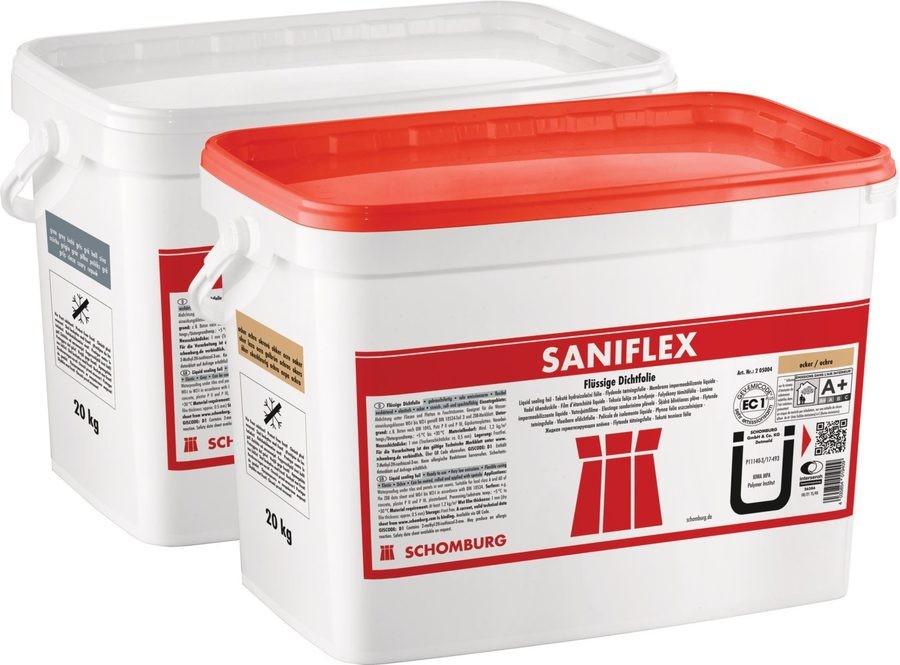 SANIFLEXReady-to-use liquid membrane for wet roomsFast liquid membranesArt. 205004Schomburg
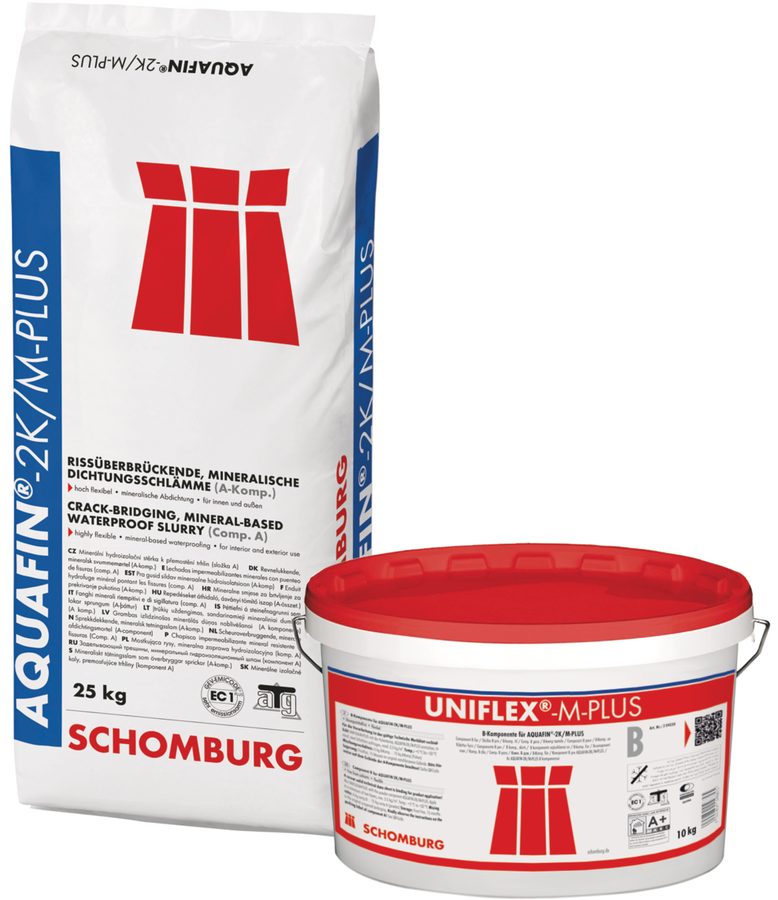 AQUAFIN-2K/M-PLUSFlexible two-component cementitious waterproofing slurryWaterproof slurries and mortarsArt. 204600Schomburg
 Sistema ASO / ADFSealing tapes, corners and sleevesSealants and tapes—Schomburg
 SealFlex ALUWaterproof butyl tape · embossed aluminiumSealants and tapesPRB-SFA
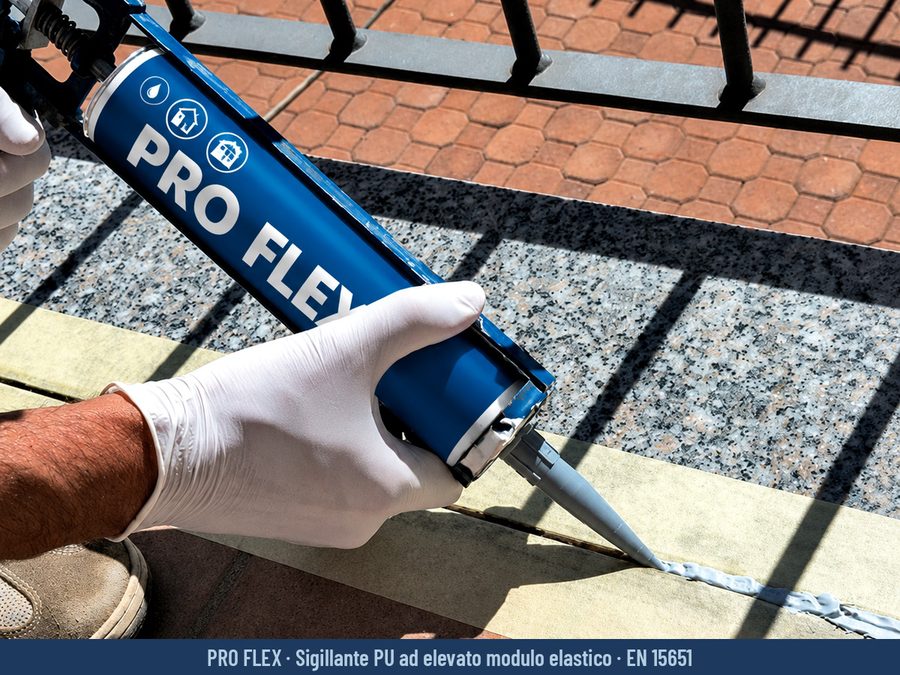 PRO FLEXHigh-modulus elastic polyurethane sealantSealants and tapesPRF-300 / PRF-600
Frequently asked questions
Can you really waterproof over existing tiles?
Yes, if the tiles are well bonded, clean and degreased, and if the perimeter junctions are solved correctly. Loose tiles must be removed and made good first.
How long before you can walk on the terrace?
With fast-reactive hybrid systems, roughly three hours for rain and foot traffic. The exact figure is on the product data sheet and depends on temperature and humidity.
Continue reading
White tank
The concrete structure is itself the waterproofing. No membrane to lay, no sheet to protec…
Retaining wall in groundwater
When a below-grade structure sits in groundwater, hydrostatic pressure is permanent and ac…
Leaking basement
The room is built, the backfill is done, and water gets in. The work is carried out from t…
Reinforced concrete repair
Spalling cover concrete is not a cosmetic issue: it is the visible symptom of a process ea…