

Swimming pools
A swimming pool is a tank that works the other way round: water pushes from the inside, permanently, and is chemically aggressive. No other structure puts waterproofing under such continuous strain.
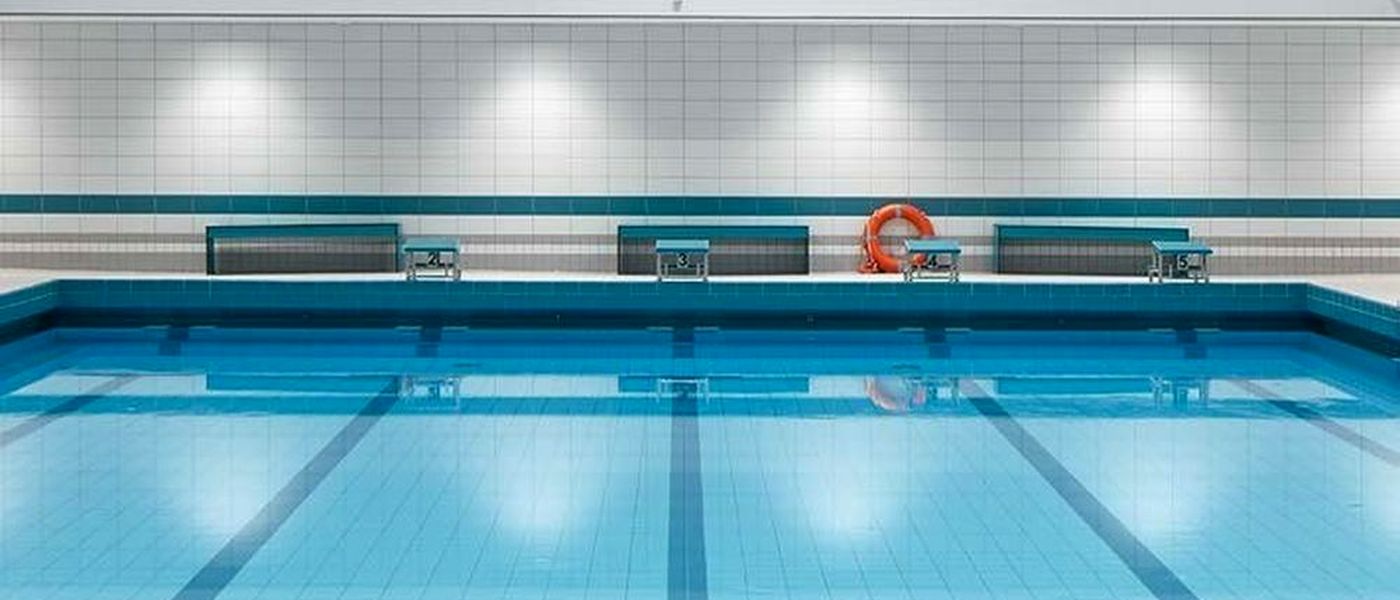
Why it is not a tank like any other
In a basement, water pushes from the outside and intermittently. In a swimming pool it pushes from the inside, always, carrying chlorine or thermal salts with it. On top of that comes the emptying-and-filling cycle, which puts the coating under tension, and in outdoor pools the thermal swing between water and air.
The coating must therefore be flexible, able to adhere to the substrate even under positive pressure from inside, resistant to chlorinated water, and compatible with the adhesive used for the tile or mosaic that will cover it.
The correct build-up
It starts with the substrate: the pool's concrete must be sound, clean, with fillets already formed at the corners between walls and floor. A consolidating primer is applied on absorbent or poorly cohesive substrates.
Next comes the actual waterproofing: a flexible two-component cementitious slurry, with crack-bridging capability and declared resistance to chlorinated water, applied in two crossed coats. This is the system specifications refer to with the code CM O1 P under EN 14891. Where fast turnaround is needed, a fast-reactive hybrid waterproofing is used, ready for recoating within a few hours.
Tile or mosaic is then laid on top with adhesive and grout suited to permanent immersion.
The points that make a pool leak
It is never the flat wall. It is the corners between floor and walls, the expansion joints, the inlet and return fittings, the skimmer, the main drain, underwater lights and service penetrations.
Each must be solved with its dedicated component: elastic sealing tapes embedded in the slurry coats, pre-formed internal and external corners, sleeves for penetrations, elastic polyurethane sealants on joints. A system is judged by the completeness of these accessories, not by the product spread over the flat surface.
A structurally waterproof tank
On large pools, sports pools and thermal facilities it is worth adding a second line of defence: making the pool's concrete waterproof with a crystalline admixture dosed at the batching plant, and treating construction joints with waterstops. The internal coating stays, but it is no longer the only barrier — and on a facility that cannot stay out of service, that redundancy is worth its cost.
For thermal pools, compatibility with the specific water composition must be checked, as it can be far more aggressive than chlorinated water.
Testing and filling
The watertightness test is carried out once the waterproof coating is complete and before laying the finish, filling the pool and measuring the drop in level over time, net of evaporation. The first definitive filling should be done gradually so as not to stress the structure, respecting the curing times of adhesives and grout.
Pool build-up and critical points
Products for this system
Selected from the Probar 2026 catalogue for this application.
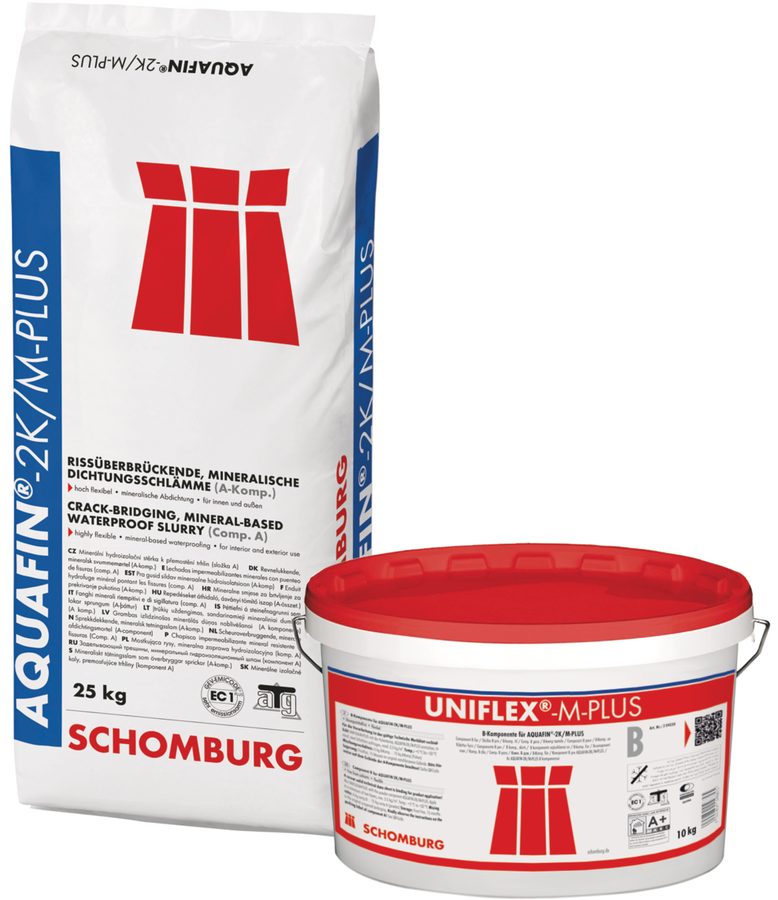 AQUAFIN-2K/M-PLUSFlexible two-component cementitious waterproofing slurryWaterproof slurries and mortarsArt. 204600Schomburg
 AQUAFIN-RS300Fast reactive hybrid waterproofingFast liquid membranesArt. 204208Schomburg
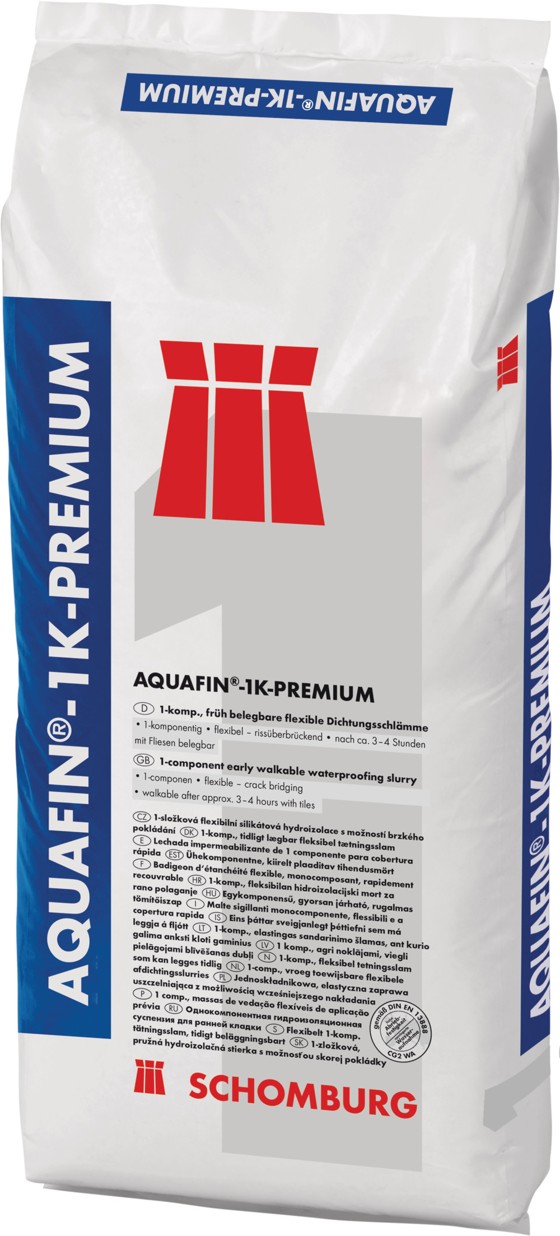 AQUAFIN-1K-PREMIUMSingle-component flexible cementitious waterproofing slurryWaterproof slurries and mortarsArt. 204249Schomburg
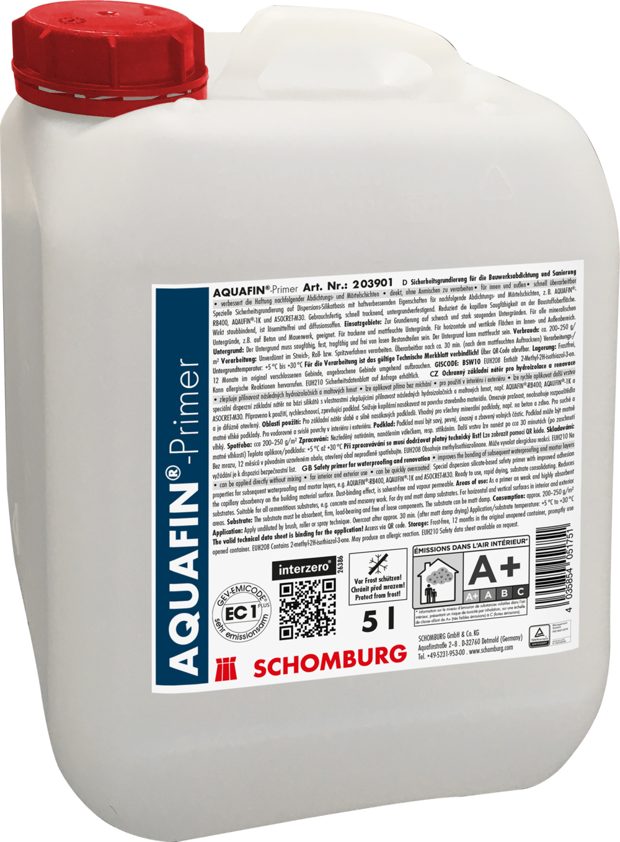 AQUAFIN-PrimerReady-to-use safety primer for preparing cementitious substratesWaterproof slurries and mortarsArt. 203901Schomburg
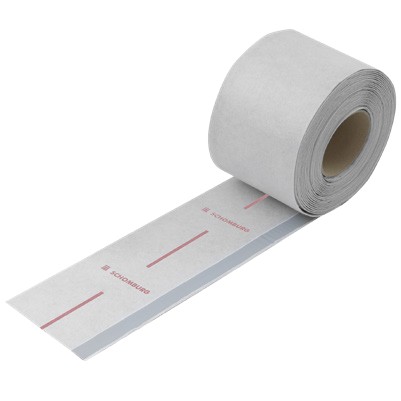 Sistema ASO / ADFSealing tapes, corners and sleevesSealants and tapes—Schomburg
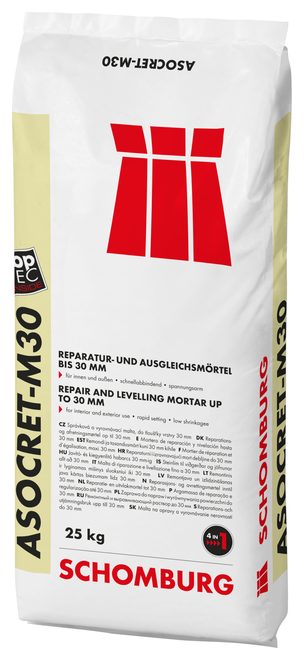 ASOCRET-M30Waterproof multi-purpose mortar up to 30 mm — 4 in 1Concrete repairArt. 205539Schomburg
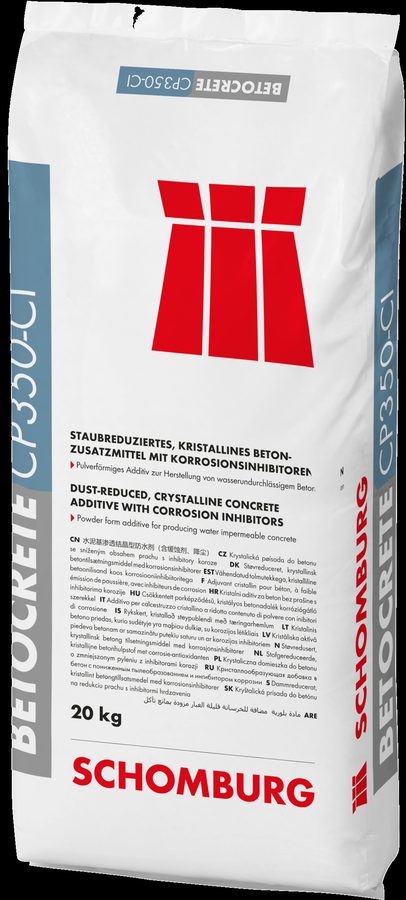 BETOCRETE-CP350-CIPowder waterproofing admixture with crystalline technology and anti-corrosion actionConcrete admixturesArt. 206456Schomburg
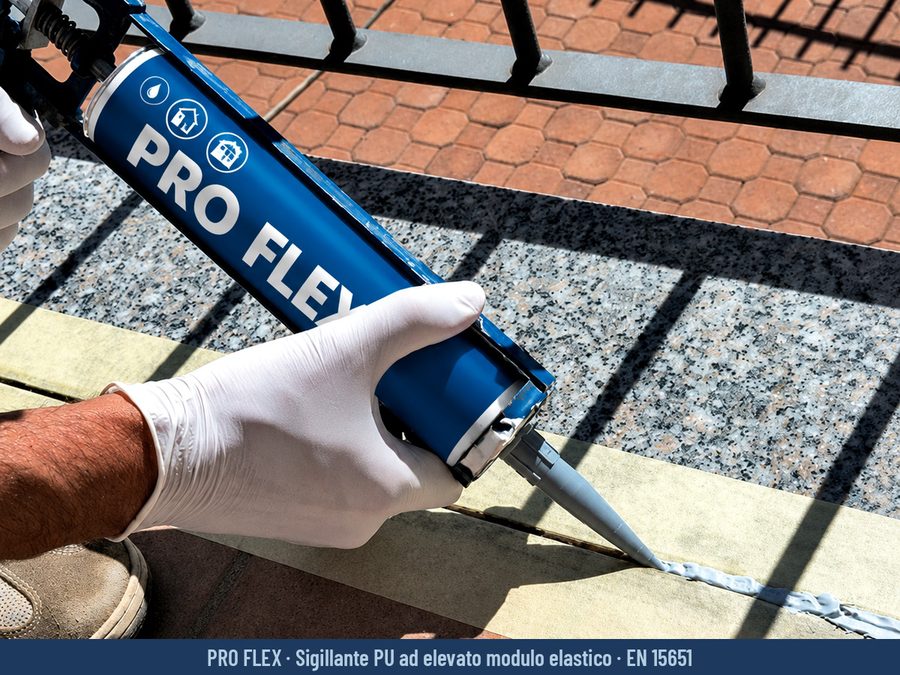 PRO FLEXHigh-modulus elastic polyurethane sealantSealants and tapesPRF-300 / PRF-600
Frequently asked questions
What waterproofing product is used for a swimming pool?
A flexible two-component cementitious slurry with declared resistance to chlorinated water and crack-bridging capability, classified under EN 14891 and suitable for permanent immersion. Rigid products are not suitable because the tank moves with the filling cycles.
Can an existing pool be waterproofed without removing the coating?
Only if the tiles are perfectly bonded and the substrate underneath is sound. In most renovations it is better to remove the coating: leaks almost always come from the junctions and penetrations, which have to be exposed anyway.
Is the crystalline admixture needed if the inside is going to be coated anyway?
It is not mandatory, but on large, sports or thermal pools it gives a second barrier independent of the coating. On a facility that cannot go out of service, it is a matter of continuity, not redundancy.
How well does it resist thermal water?
It depends on the specific chemical composition, which must be analysed: some thermal waters are far more aggressive than chlorinated water and call for resin-based rather than cementitious coatings.
Continue reading
White tank
The concrete structure is itself the waterproofing. No membrane to lay, no sheet to protec…
Retaining wall in groundwater
When a below-grade structure sits in groundwater, hydrostatic pressure is permanent and ac…
Leaking basement
The room is built, the backfill is done, and water gets in. The work is carried out from t…
Reinforced concrete repair
Spalling cover concrete is not a cosmetic issue: it is the visible symptom of a process ea…