
Sewage treatment and process tanks
In treatment plants, concrete suffers three attacks at once: chemical, biological and mechanical. It is the harshest environment a structure can work in.
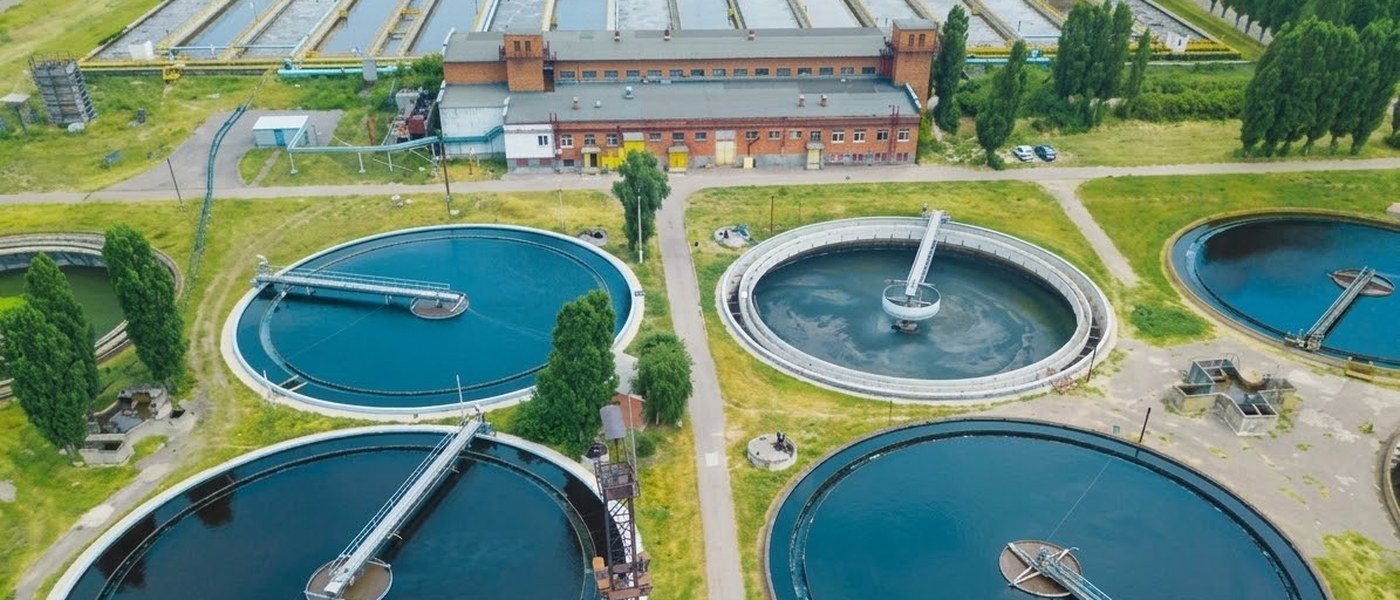
Biogenic corrosion
In sewers and tanks, bacteria reduce the sulphates present in the wastewater, producing hydrogen sulphide, which is released into the structure's atmosphere. On the walls above the water line, other bacteria oxidise it into sulphuric acid, which attacks the cementitious matrix.
It is a process that does not stop by lowering pollutant concentrations: it is intrinsic to how the plant works. In the air-liquid exchange zones, degradation can reach several millimetres a year.
The wet-dry cycle
Tanks with variable levels subject the fluctuation band to continuous saturation and drying cycles, which concentrate salts and amplify the attack. It is the zone that fails first and must be designed to stricter criteria than the rest of the structure.
The strategy
On new works it is worth combining concrete made waterproof in the mass, which limits absorption and therefore the penetration of aggressive agents, with an acid-resistant coating in critical zones. DIN 4030 classifies water aggressiveness and guides the choice.
On existing works the intervention always starts by removing degraded concrete and repairing the section to UNI EN 1504, before any protection. Joints must be treated separately: they are the point where the coating is interrupted.
Products for this system
Selected from the Probar 2026 catalogue for this application.
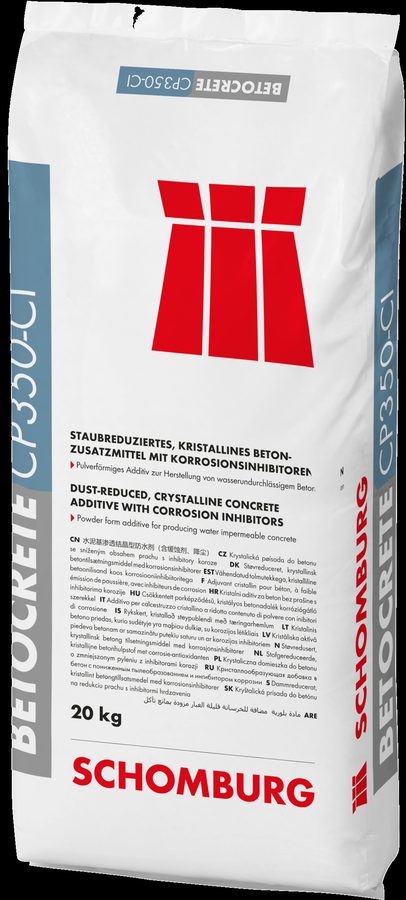 BETOCRETE-CP350-CIPowder waterproofing admixture with crystalline technology and anti-corrosion actionConcrete admixturesArt. 206456Schomburg
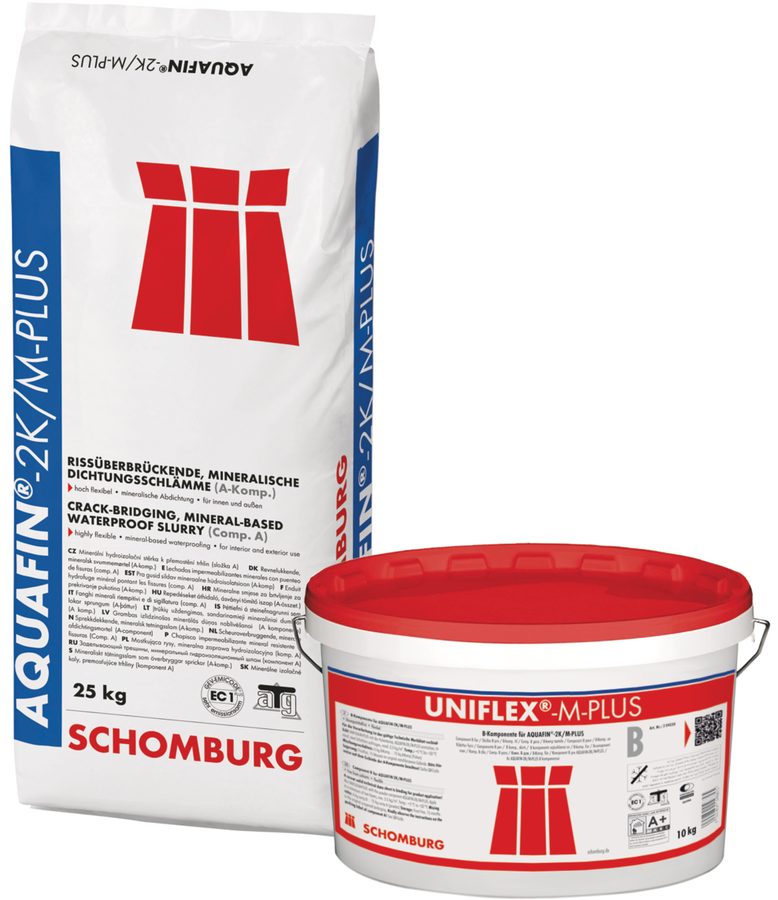 AQUAFIN-2K/M-PLUSFlexible two-component cementitious waterproofing slurryWaterproof slurries and mortarsArt. 204600Schomburg
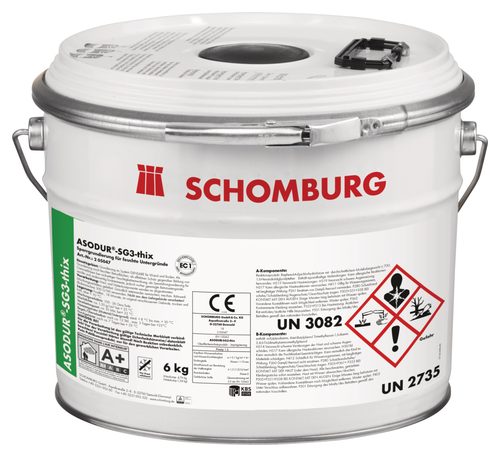 ASODUR-SG3-THIXThixotropic epoxy barrier primer for damp substratesConcrete repairArt. 205047Schomburg
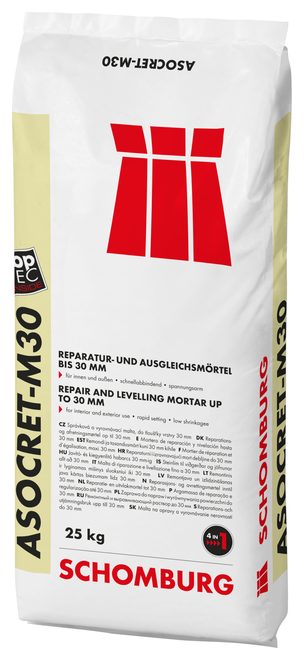 ASOCRET-M30Waterproof multi-purpose mortar up to 30 mm — 4 in 1Concrete repairArt. 205539Schomburg
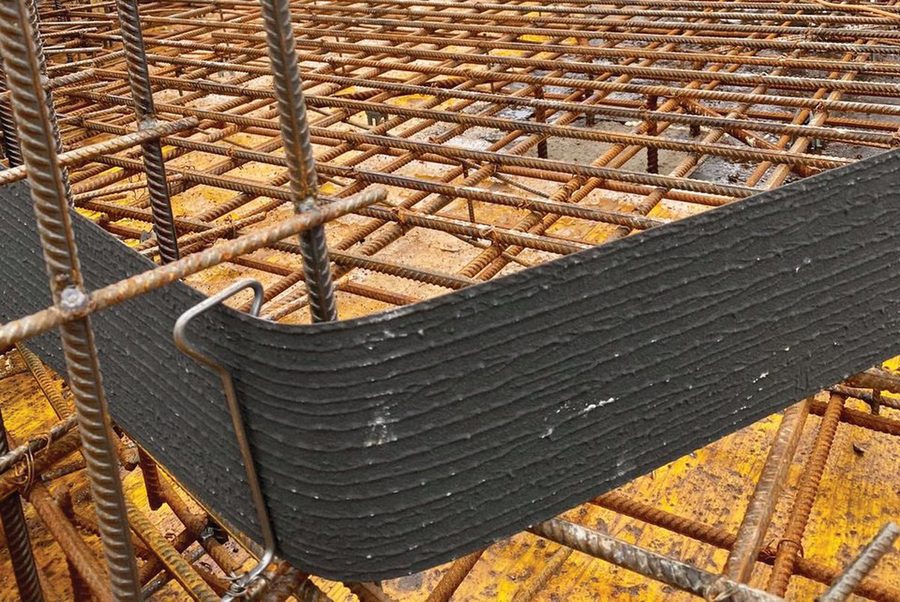 AQUAFIN-CJ5Active crystalline waterstop sheet, in galvanised steel coated on both sidesWaterstops and construction jointsSistema BETOCRETE-CSchomburg
Frequently asked questions
Why is degradation worse above the water level?
Because that is where gaseous hydrogen sulphide is oxidised into sulphuric acid on the damp surface of the walls. Below the water line the chemical attack is different and generally slower.
Does the tank need to be emptied to intervene?
Yes, for repair and protection work. Scheduling the plant's downtime is often the main constraint of the intervention and must be defined before choosing the materials.
Continue reading
White tank
The concrete structure is itself the waterproofing. No membrane to lay, no sheet to protec…
Retaining wall in groundwater
When a below-grade structure sits in groundwater, hydrostatic pressure is permanent and ac…
Leaking basement
The room is built, the backfill is done, and water gets in. The work is carried out from t…
Reinforced concrete repair
Spalling cover concrete is not a cosmetic issue: it is the visible symptom of a process ea…