

Facades and exposed concrete
On architectural concrete, quality is decided before the pour, with the release agent, and preserved afterwards, with hydrophobing.

Before the pour: the release agent
A successful fair-faced surface depends on the release agent as much as on the formwork. A pre-emulsified paste product forms a film that stays in place during the pour, avoids bubbles and dusting, and does not alter the colour of grey or white cement.
On steel formwork and in hot-weather work, stable latest-generation emulsions are needed, guaranteeing release even at high temperatures and protecting the formwork from oxidation. Biodegradability and non-flammability are not minor details: they affect site storage and safety.
The exposed-aggregate finish
The surface retarder delays the setting of the surface mortar to a controlled depth: the laitance washes off and the aggregate is left exposed, uniformly and without mechanical preparation. The fluorescent colour serves a practical purpose — making the application visible on the fresh pour, because an untreated area is only noticed when it is too late.
Afterwards: hydrophobing
Silane-based impregnating creams penetrate deep into the cementitious substrate and make it hydrophobic while keeping it vapour-permeable. They are colourless after drying, do not alter the surface appearance, and are applied in a single pass by spray, roller or brush.
Reducing water absorption means reducing, together, washout, frost attack, the penetration of pollutants and the growth of biological deposits: it is the cheapest preventive maintenance a facade can receive.
Products for this system
Selected from the Probar 2026 catalogue for this application.
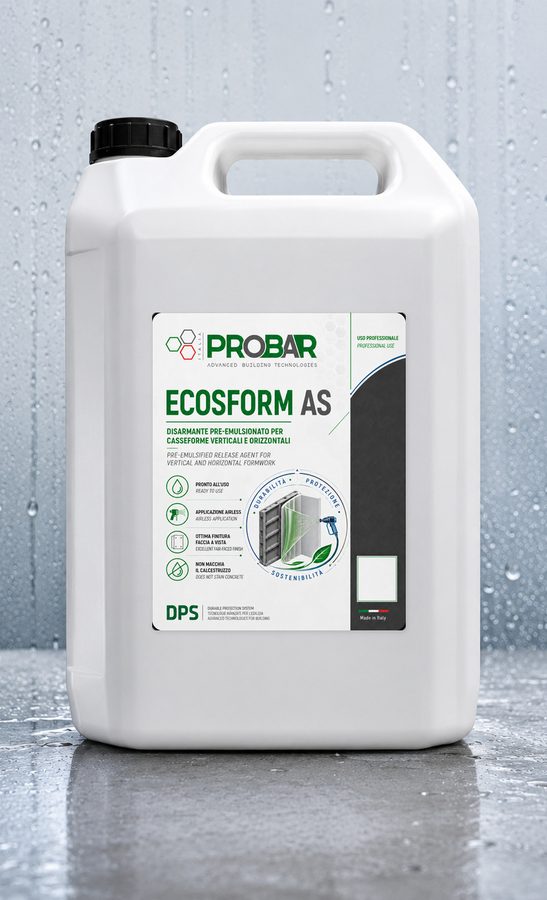 ECOSFORM ASPre-emulsified paste release agentRelease agents and surface retardersESAS-25 / ESAS-210 / ESAS-1050
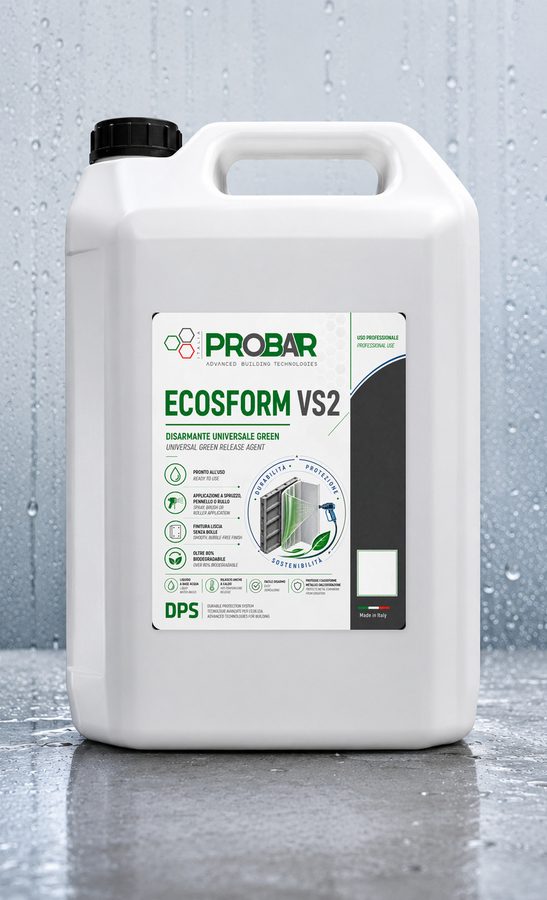 ECOSFORM VS2Universal eco-friendly liquid release agentRelease agents and surface retardersEVS2-25 / EVS2-1000
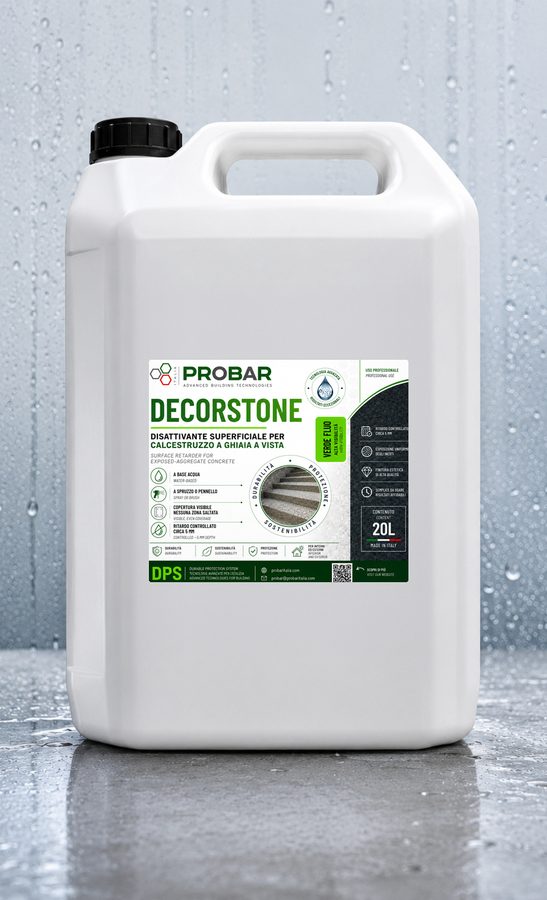 DECORSTONESurface retarder for exposed-aggregate concreteRelease agents and surface retardersDEST-20 / DEST-210 / DEST-1050
 ASOLIN-SFC45Deep-acting hydrophobic cream for facadesRenovation rendersArt. 201247Schomburg
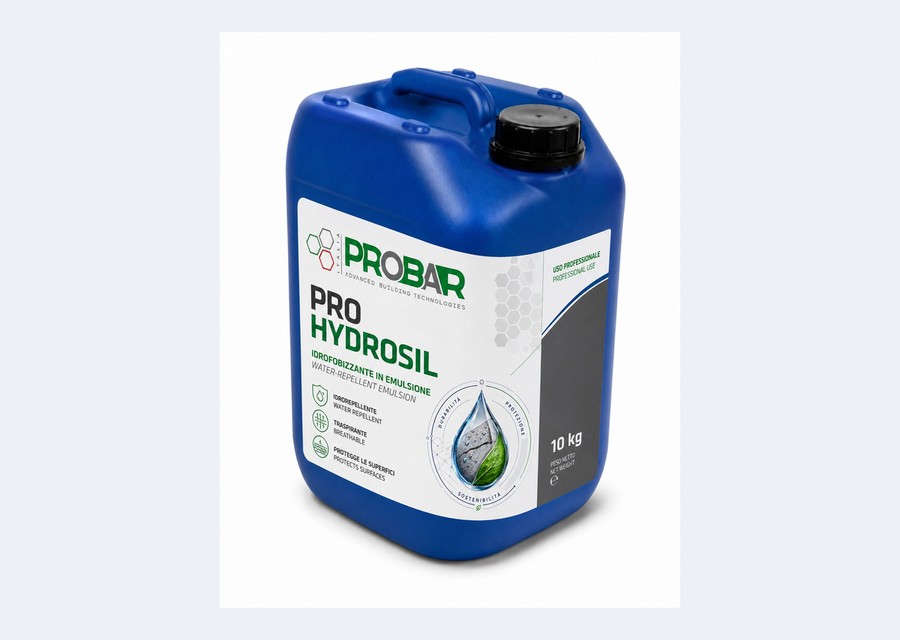 PRO HYDROSILLow-VOC silane hydrophobic emulsionRenovation rendersPHS-10 / PHS-25
Frequently asked questions
Does the hydrophobic treatment change the facade's appearance?
Silane creams are colourless after drying and do not form a surface film. A slight darkening of the tone can appear on very absorbent substrates: a test patch is always advisable.
How often does the treatment need renewing?
It depends on exposure and substrate. Silane impregnation penetrates the pores and is not a film that flakes off, so it lasts many years, but this should be checked with absorption tests on the specific facade.
Continue reading
White tank
The concrete structure is itself the waterproofing. No membrane to lay, no sheet to protec…
Retaining wall in groundwater
When a below-grade structure sits in groundwater, hydrostatic pressure is permanent and ac…
Leaking basement
The room is built, the backfill is done, and water gets in. The work is carried out from t…
Reinforced concrete repair
Spalling cover concrete is not a cosmetic issue: it is the visible symptom of a process ea…